Vinay Kumar
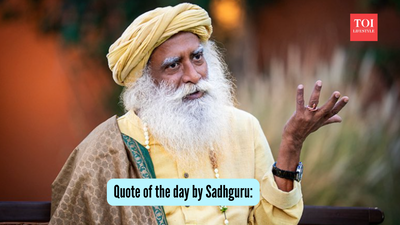
Sadhguru Jaggi Vasudev
The public domain has been rife with conversations about yoni worship since the recent Ambubachi Mela in Kamakhya. What is yoni worship and what is its significance?
First, let us not forget that the worship of the feminine was the most ancient form of worship on this planet. However, as cultures began to look ‘upward’ rather than towards Mother Earth, and as the masculine grew dominant, we allowed our goddess traditions to be effaced. Today, India is among the countries where veneration of the Divine Feminine still flourishes.

It is important to remember that ‘masculine’ and ‘feminine’ are qualities that are found in both men and women. Individuals and societies need to balance both aspects within themselves to lead fulfilling lives. Modern psychoanalysis affirms this, but the yogic tradition recognised this long ago. This is a civilisation that has refused to divide the masculine and feminine, always viewing them as complementary, not contradictory.
In Sanskrit, yoni means ‘womb’, not vagina, as many suppose. In most Eastern cultures, there is no separate word for the vagina, because the mechanism that generates new life is viewed as a whole, not in a fragmented way. Today, the word ‘yoni’ provokes lewd humour, and social lingo denigrates the female body in innumerable ways. What we overlook is the tremendous value of a civilisation that turns an abusive term into a sacred one. This ethos is straightforward and clear-eyed about the fundamentals of existence. It does not disparage the life process as lowly or filthy. It sanctifies it.
The symbolism of the linga and yoni is audacious. When the masculine and feminine meet at the physical level, it is known as sex. When they meet at the highest level, it is spirituality, the union of all opposites. Consequently, there can be no worship of linga, masculine principle, without the yoni, feminine principle.
Revering the regenerative process was also a way of revering women. Without bringing sanctity to the womb, women would have been reduced to mere sex slaves in a world that glorifies might as right. Unfortunately, exploitation has still occurred, but this fundamental worldview has helped keep it in check. The tantric image of Kali standing on Shiv’s inert body is a powerful reminder that the masculine is lifeless unless invigorated by the feminine.
Many yoni temples have been demolished by those who could not understand their significance. But thankfully, several endure, the most significant being Kamakhya in Guwahati. I have been to numerous small Mother Goddess temples in Indian towns and villages, consecrated centuries ago, that are still fiercely alive.
When crass economics rules, the subtler and finer aspects of life will be ignored, and the masculine will naturally dominate. However, once the feminine is lost, everything that is nurturant, beautiful and non-competitive will vanish from our planet. The fire of life will be lost forever. This is a terrible loss, not easy to reclaim.
The yoni is the magic chamber in which life is created. Each of us has inhabited it in the most crucial part of our making. In addition to our mother’s womb that nurtured us, there is the larger womb that nurtures the planet, and an even larger one that nurtures the entire cosmos. When we venerate the yoni, we are seeing the entire existence as a life-making crucible. Every step we take is always within the sacred womb of Devi.
Disclaimer
Views expressed above are the author’s own.