Vinay Kumar
Few nations have bet as boldly on engineering and manufacturing as Korea and won as decisively. The Miracle on the Han River compressed decades of development into a single generation, built not on natural resources but on discipline, investment in human capital, and an absolute refusal to accept geographic constraints. India, arriving at its own industrial moment sixty years later, is drawing on that same instinct. The foundation for a transformative bilateral partnership has never been stronger.
The parallels are not coincidental. They are architectural. Both nations built their economic identities through export ambition, through the conviction that domestic demand alone was an insufficient foundation, and through an enormous bet on human capital as the primary lever of national transformation. That shared instinct is now the most powerful asset in the Korea-India relationship, and the Korean President’s visit to India is the moment to build on it at scale.
The scale of the opportunity
The bilateral numbers reflect a relationship that is already moving and has significant runway ahead. India-Korea trade stood at $26.89 billion in FY25, according to India’s Department of Commerce, against Korea’s annual trade with ASEAN that approaches $200 billion. India’s GDP, now approximately $4 trillion, is broadly comparable to the combined weight of all eleven ASEAN economies. The comparison is not a critique; it is a measure of how much shared ground remains to be covered, and both sides know it.
Korea is already India’s 13th largest FDI investor, with cumulative inflows of $6.69 billion between April 2000 and March 2025, per DPIIT data. With a joint $50 billion bilateral trade target for 2030 declared, the architecture of a serious partnership is gaining momentum.
That direction matters because the context has shifted decisively. The era in which trade relationships were evaluated almost entirely on cost is over. Supply chains are now being configured around reliability, governance quality, and geopolitical alignment—around the question of which nations can be trusted to remain stable, open partners through periods of sustained global uncertainty. Both India and Korea answer that question well. Neither has yet fully leveraged the answer they share.
A maker, not just a market
India has made a strategic choice whose consequences are still unfolding. The Semiconductor Mission, the electronics PLI scheme, and the systematic integration of Indian engineering talent into high-technology global supply chains are not isolated policy initiatives. They are a coordinated signal that India intends to build the technologies the world depends on. The shift from consumer to producer of advanced technology is rarely declared. India is enacting it.
For Korea, this trajectory represents an opportunity that only deepens with time. An economy of India’s scale—democratic, rules-based, with a workforce of the size and technical depth that no other single country can currently match—moving deliberately into the industrial terrain where Korea has spent decades establishing expertise: that is not a competitive development. It is the emergence of a partner whose capabilities were previously missing from the bilateral equation. Korea’s technology depth and India’s talent and market scale are complementary in ways that are structural rather than circumstantial. Converting that complementarity into co-production is no longer a strategic nicety. In a world reorganising around trusted technology partnerships, it is a necessity.
Three decades of proof point
When Korean companies first committed capital to India in the early years of liberalisation, they were making a bet that the returns would not be immediate. The wager was on structural alignment, on the long-term logic of two export-driven, engineering-oriented economies finding each other indispensable.
Across electronics, automotive, and heavy industry, what followed was not a collection of separate market entries but a single deepening pattern. Samsung arrived in 1995 with a long-horizon read on India’s industrial potential. Over three decades, it built what became the world’s largest mobile manufacturing facility in Noida, a plant that today sits at the centre of a global supply chain, not just a domestic one.
Samsung’s R&D centre in Bengaluru, the company’s largest research operation outside Korea, has produced over 14,000 patents now woven into product lines spanning AI, language technology, and connected systems sold worldwide. What Samsung demonstrated, across manufacturing, research, and talent development, is that depth of presence generates outcomes that no market-entry strategy could have produced on a shorter timeline.
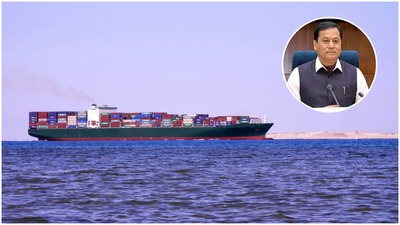
The same logic has since extended into new industrial domains. An MoU between another Korean automobile major and Cochin Shipyard, signed in 2025 and expanded into naval cooperation, points toward the next frontier of what this bilateral can build together. The through-line is consistent: initial commitment, progressive localisation of capability, and eventual integration into value chains that supply the world rather than a single market.
This is what partnership at depth looks like in practice, and it is proof of concept on which a broader bilateral framework can now be built.
The framework that can deliver
The $50 billion bilateral trade target for 2030 is well within reach and should be understood as exactly that—a floor, not an aspiration. The more consequential goal is institutional architecture that makes the number a natural consequence of how deeply both economies are building together.
A formal India-Korea Technology Partnership Framework, with co-production commitments in semiconductors, clean energy, shipbuilding, and artificial intelligence, and structured provisions for joint R&D, shared IP development, and engineering talent exchange, would give permanent institutional form to what thirty years of corporate engagement have already demonstrated is possible.
Both nations took the same road to prosperity. The presidential visit is the moment to ensure that two governments travel the next stretch of it together.
Disclaimer
Views expressed above are the author’s own.
END OF ARTICLE