Vinay Kumar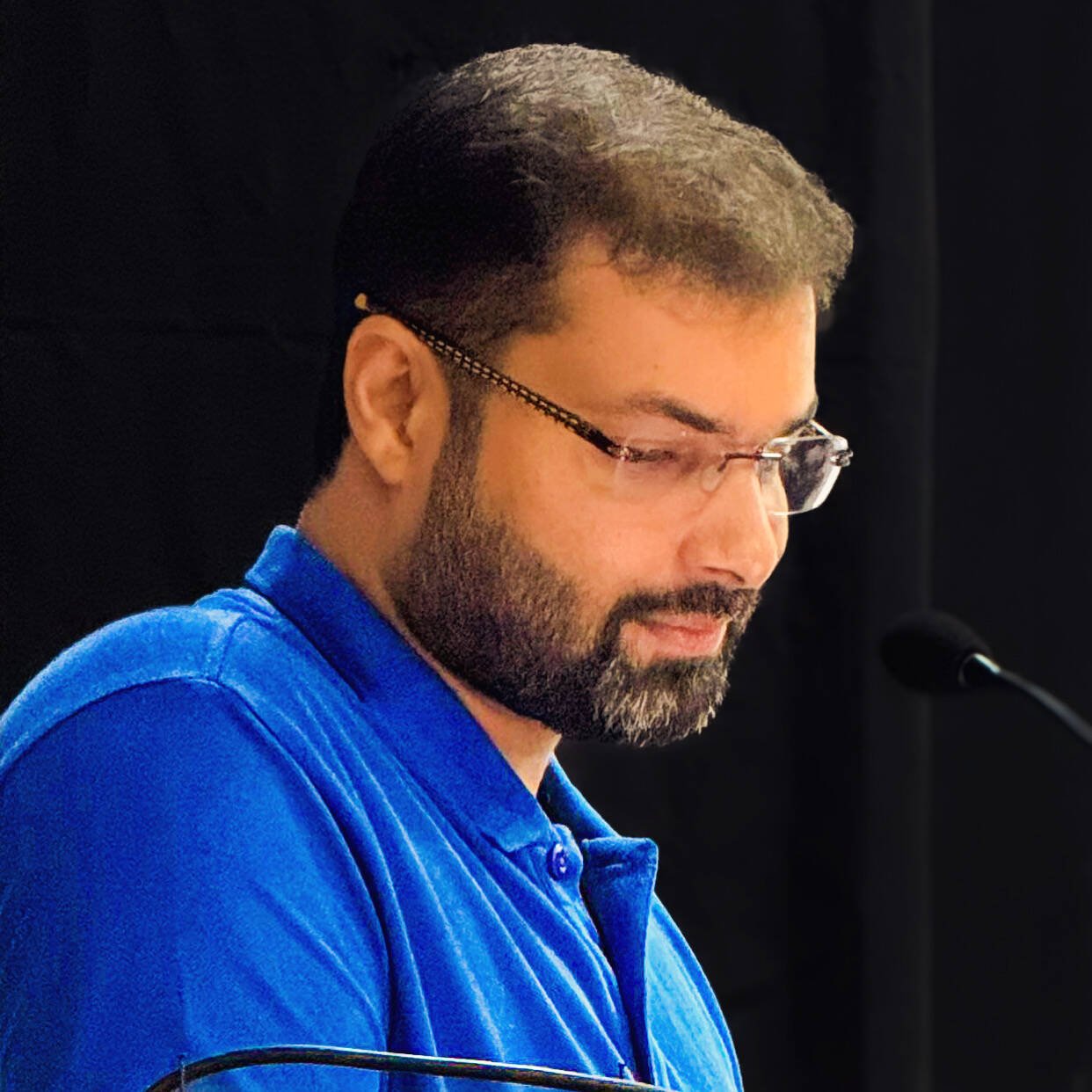
There is a quiet confession sitting underneath most of our love stories, and almost nobody says it out loud. Many of us are not searching for love at all. We are searching for someone, anyone, who will turn the volume down on the loneliness we have been carrying since childhood. And the brain, brilliant and ancient, cannot easily tell the difference between being loved and being soothed. That is why we keep choosing wrong, and that is why the same heartbreak keeps wearing a different face.
The confession most of us will not make
A few years ago, a young woman walked into my coaching room in Mumbai and said something I have never forgotten. “Sir, I do not love him. But I cannot sleep alone.” She was thirty-one, working at a consulting firm, the eldest daughter of a respectable Punjabi family, three months into an engagement she already knew would end badly. When I asked her what she actually wanted from this man, she paused for a long time. “Anaesthesia,” she finally said.
That word stayed with me. Anaesthesia. Not love. Not partnership. Not even comfort. Just numbness.
I have heard versions of that sentence from hundreds of clients across India, Mauritius, and Singapore. Polished professionals, devout homemakers, Tinder veterans, freshly divorced mothers, men in their fifties who married for the second time and still feel hollow. Most of them are not lying when they say they want love. They simply have not realised that what they call love is often a sophisticated escape from a much older ache.
The brain mistakes anaesthesia for affection
The late John Cacioppo, the neuroscientist who built the modern science of loneliness at the University of Chicago, argued that loneliness is not a feeling. It is a biological alarm, in the same family as hunger and thirst. When the brain registers prolonged social disconnection, the hypothalamic-pituitary-adrenal axis (the body’s main stress circuit) begins to flood the system with cortisol, the chief stress hormone. Sleep fragments. Inflammation climbs. The amygdala, the brain’s threat detector, becomes hypervigilant. Cacioppo’s work demonstrated that chronic loneliness raises early mortality risk by roughly 26 percent, comparable, as former US Surgeon General Dr Vivek Murthy noted in his landmark 2023 advisory, to smoking fifteen cigarettes a day.
So when a lonely brain finally meets someone who lowers that alarm, it does not whisper, “this is love.” It screams, “this is medicine.” And we, intoxicated by the relief, call it destiny.
The neuroscience is humbling. The mesolimbic dopamine pathway, which lights up when we fall for someone new, also lights up when an addict gets a fix. Dopamine does not care whether what is reducing our suffering is good for us. It only cares that the suffering has, for now, been reduced. This is the trap. We are not choosing partners. We are choosing painkillers.
India’s quiet epidemic behind the wedding photographs
We Indians do not like to admit we are lonely. We have joint family WhatsApp groups, marigold-laden weddings, festivals stacked on festivals, an army of cousins on speed dial. And yet a 2025 World Health Organization report, prepared by the Commission on Social Connection co-chaired by Dr Murthy, found that one in six people globally felt lonely between 2014 and 2023, with young people aged 13 to 29 reporting some of the highest rates, around 17 to 21 percent. The report also linked social disconnection to an estimated 871,000 deaths a year. Indian data is even more sobering. A meta-analysis covering thirteen studies and over three thousand young Indians found that nearly 24 percent of Indian youth struggle with loneliness, and post-pandemic surveys placed the figure for urban 18 to 29 year olds closer to 30 percent.
Look honestly at our marriages, then. How many are genuine partnerships, and how many are quiet arrangements to avoid the unbearable lightness of being unaccompanied? How many auntyji recommendations are weaponising loneliness while dressed up as concern about “settling down”? We have built an entire matrimonial industry on the social shame of being alone, and we are then surprised when emotional affairs flourish behind respectable wedding albums and divorce rates in metro India keep climbing.
Why we keep choosing the familiar wound
If loneliness alone were the issue, almost anyone could fix it. The deeper trouble is what Sigmund Freud called repetition compulsion, our strange habit of recreating childhood wounds in adult relationships, hoping that this time the ending will be different. The anxious child of an emotionally absent father falls for the unavailable man. The girl who never felt seen by her mother marries a partner who keeps her invisible. The boy who learned love through criticism partners with a woman who never finds him quite enough.
Attachment theory, pioneered by John Bowlby and Mary Ainsworth, gives this a cleaner name. Our nervous system, by roughly the age of seven, learns a template for closeness. Secure, anxious, avoidant, or disorganised. That template then quietly selects our partners for us, often against our conscious wishes. Stephen Porges, the neuroscientist behind polyvagal theory (which studies how our vagus nerve regulates safety and connection), would say it even more sharply. We do not fall for who is good for us. We fall for who feels familiar to our nervous system, even when familiar means painful.
Solitude is not loneliness
In yogic philosophy there is a beautiful distinction between ekant, intentional solitude, and tanhai, aching loneliness. One is a chosen retreat. The other is an unchosen exile. The tragedy of our times is that we have lost the art of ekant. We cannot sit with ourselves for more than seven minutes without reaching for a phone, a partner, a job, a child, a cause, a substance. And so we marry our distractions and call it love.
A teacher of mine once said, “If you cannot be your own company on a Sunday afternoon, you will marry your noise.” I have watched that sentence prove itself in client after client. The ones who learn to be truly alone eventually choose better. The ones who flee solitude keep mistaking their anaesthetists for their soulmates.
Choosing differently is mostly an inside job
I usually offer my coaching clients three internal disciplines when they ask how to break this pattern. First, befriend your loneliness before you sign any romantic contract. Sit with it. Name it. Ask what it is actually mourning, because it is usually mourning something far older than your last breakup. Second, audit your nervous system before your dating apps. If calm feels boring and chaos feels like chemistry, your wiring is doing the choosing, not you. Third, look honestly at what you offer. Are you arriving as a whole human, or as a vacancy looking to be filled?
The Harvard Study of Adult Development, which has tracked human lives for more than eighty years, concluded that the single strongest predictor of late-life happiness was the quality of close relationships, not their quantity. Quality, not quantity. Most of us have been hoarding the wrong currency.
The question worth sitting with
So here is the uncomfortable question I leave you with. The next time you feel the urge to text the wrong person, return to the wrong relationship, or settle for the next-best partner because the silence at home has grown too loud, ask yourself honestly. Am I reaching for love? Or am I reaching for relief?
Because love, the real kind, does not arrive to rescue us from ourselves. It arrives when we have stopped needing to be rescued. Until we do that quiet, unglamorous inner work, we will keep choosing wrong, and we will keep calling it fate.
It is not fate. It is biology. And biology, mercifully, can be retrained.
Disclaimer
Views expressed above are the author’s own.