Vinay Kumar
Power, provocation and Pak army
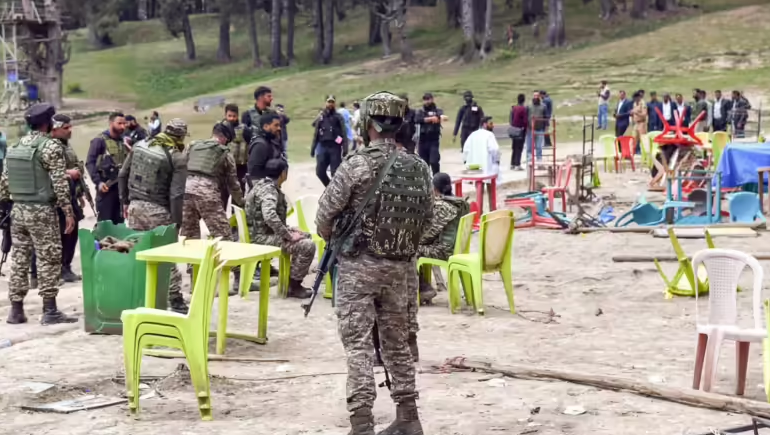
On 22 April 2025, India was shaken by the dastardly murder of 26 innocent civilians in the picturesque Baisaran Valley near Pahalgam – a calculated act of terror by Pakistan-based terrorists. This brutal act of selective killing was a deliberate attempt to shatter the fragile peace returning to the Valley and to inflame communal faultlines across India. The massacre jolted the country’s conscience and demanded a firm response. Various response options were deliberated and simultaneously higher levels of operational readiness were affected to prevent uncontrolled escalation. Operation SINDOOR, launched a fortnight later on 07 May 2025, was a demonstration of decisive leadership backed by a capable military. The response was measured yet forceful; initially only the terrorist bases were targeted to strike the perpetrators of terror and their handlers but a clear and uncompromising message was sent to Pakistan’s rulers and generals. When Pak forces subsequently engaged own posts and civilian targets, our retaliation was so intense, degrading and destroying their posts and air bases, that Islamabad pleaded for a ceasefire on 10 May 2025. Own actions were designed to inflict punitive punishment and restore the desired deterrence. If Pak Army were guided by reason and national interest, it would be deterred and desist from sponsoring such acts in future – for the sake of its people. But history warns otherwise; vested interests of the Pak Army, and its need to remain politically central, have repeatedly driven it to choose confrontation over conciliation.

Pakistan’s founding myth has long rested on an anti-India narrative, and that narrative has been cultivated across generations and institutions. Kashmir had been the most potent pretext and the separation of East Pakistan, a consequence of deep prejudices and political failures toward the Bengali population, too was exploited to stoke anti-India sentiment. Crucially, the Army seized power early and has never fully relinquished it. Even when civilian faces occupy the corridors of power, the military ensures they remain pliant. Strong political figures who challenged that dominance have been removed – the Bhuttos paid with their blood, and Imran Khan has been sidelined, for daring to contest the Army’s supremacy.
Where does the Pak Army draw its authority? Largely from perpetuating the idea of an existential threat from India and presenting itself as the indispensable guardian of Pakistan’s sovereignty and Islam. Peace with India would strip the Pak Army of that claim and of its raison d’être. So, regardless of the cost to Pakistan’s economy or its people, Pak Army has an enduring incentive to keep confrontation with India alive. When political rapprochement is attempted and the Prime Ministers of the two countries talk of peace, as was the case in Lahore, Pak Army finds the ways to derail the peace process, as it did in Kargil. Similarly, when its authority is challenged externally; on the Afghan border, or internally; as during the 2023–24 unrest by Imran Khan’s supporters, the Army finds ways to provoke and escalate conflict with India to revive the narrative of existential threat and rally public support. Perhaps the main reason behind the Pahalgam attack was to reassert that relevance.
Will the Pak Army undertake another misadventure akin to Pahalgam? On the face of it, the Pak Army looks unassailable – confident at home and courted abroad. Its Field Marshal enjoys the confidence of the world’s most powerful political executive. It has basked in global attention by hosting peace talks between the United States and Iran. It has stitched together a “Quad” with Saudi Arabia, Türkiye, and Egypt, while China remains its all-weather ally. For now, the contradictions are being managed well, yet, “hunting with the hounds and running with the hare” carries inherent risks. Shorn of ideology, Pak Army can pivot for profit, dictating terms to a pliant civilian government and taking decisions without any accountability. The aftermath of Operation SINDOOR too has been smoothed over with deft narrative management, leaving the Pak Army comfortably ensconce. In such comfort, calling the shots with a lame-duck civilian dispensation bending backwards, what could possibly go wrong for Pak Army? Plenty.
First, Pakistan’s economic condition is dire. With external debt at $138 billion and foreign exchange reserves hovering around $20 billion, Islamabad is compelled to repeatedly beg for bailouts. Any fresh crisis, such as the current turmoil in the Gulf, will only worsen the precarious situation, fuelling unrest among the populace.
Second, the Afghan border remains volatile. The conflict with the Baloch National Army is intensifying, and indiscriminate airstrikes on civilians have deepened resentment. The Tehrik-e-Taliban Pakistan continues to strike with impunity, while attacks on Kabul by Pak Air Force have further strained relations with Afghan Government, leaving little room for manoeuvre.
Third, the Imran Khan factor. Though seemingly dormant, his party PTI retains mass popularity. Denied victory through the Army’s machinations, his supporters may again take to the streets, challenging the Army’s supposed infallibility.
Finally, the snakes reared in its own backyard – the terrorist tanzeems nurtured to bleed India – may turn inward when deprived of patronage, biting the very hand that feeds them.
Beneath the veneer of strength of Pak Army lies its fragility. Any of the scenarios outlined would call into question its claim to be the sole arbiter of Pakistan’s national interest and would undermine its standing. That perceived erosion of authority could prompt the Army to sponsor a grave terror strike in India—an act designed to invite a punitive Indian response and thereby thrust the Pak Army back into the national spotlight, restoring its relevance. Pak Army’s misadventures may yet return, driven not by national interest but by its own need for relevance.
According to various reports, roughly 90 Pakistan-based terrorists remain active in Jammu and Kashmir. Despite their presence, the current low levels of violence testify to the ascendancy and dominance of Indian security forces. Yet this calm could be deliberate; keeping the well-trained terrrorists dormant until they are needed for a spectacular attack that guarantees retaliation. If such an attack occurs, Pakistan would face far harsher consequences than before; its people would suffer grievously. But for the self-serving Generals national pain may be an acceptable price if it secures the Pak Army’s return to primacy. Will Pahalgam happen again? Answer perhaps lies with the Pak Army.
Disclaimer
Views expressed above are the author’s own.
END OF ARTICLE