Vinay Kumar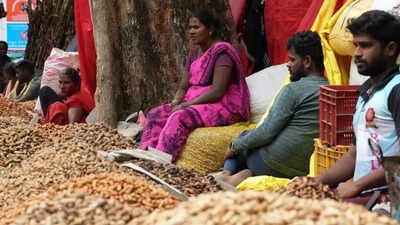
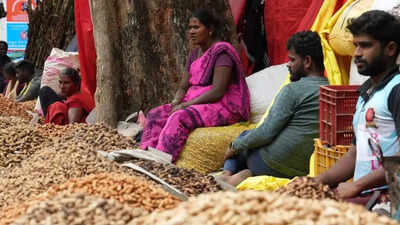
NEW DELHI: The Centre has extended the PM SVANidhi scheme till March 2030, expanding a programme that was launched during the COVID-19 pandemic to provide collateral-free loans to street vendors struggling with loss of income and working capital.Launched in June 2020, the Prime Minister Street Vendor’s AtmaNirbhar Nidhi (PM SVANidhi) scheme was aimed at bringing urban street vendors into the formal financial system through institutional credit, digital payments and welfare linkages.The scheme was designed taking in account the small vendors selling vegetables, tea, flowers, snacks, shoes, household items and essential services on a daily basis powering the streets. These vendors form the backbone of the urban informal economy, supplying affordable goods and maintaining neighbourhood-level supply chains across cities and towns.For decades, most street vendors operated outside the formal financial system. Access to institutional credit remained limited, forcing many to depend on informal lenders charging high interest rates.
What is PM SVANidhi?
PM SVANidhi is a microfinance scheme designed for street vendors operating in urban areas. The scheme provides collateral-free working capital loans and seeks to reduce vendors’ dependence on informal borrowing.The scheme also promotes digital payment adoption, institutional banking access, financial literacy, and social protection coverage. The larger objective is to integrate street vendors into the formal financial ecosystem while improving the sustainability of their livelihoods.
Who are the beneficiaries?
The scheme targets street vendors operating in cities and towns across India. These include:
- vegetable sellers
- tea vendors
- roadside repair workers
- small market traders
- flower sellers
- other self-employed urban workers
Under the scheme, more than 75 lakh beneficiaries have availed benefits out of which nearly 46 percent beneficiaries are women, and around 70 percent beneficiaries belong to marginalised communities.
How the scheme works
PM SVANidhi provides collateral-free working capital loans in phases. The loans are offered with guarantee support and are linked to repayment performance.The scheme provides loans in three stages:
- Rs 10,000
- Rs 20,000
- Rs 50,000
Vendors who repay earlier loans on time become eligible for higher loan amounts in later stages. The model is intended to gradually improve vendors’ creditworthiness and financial stability.Nearly 100 per cent of borrowers who completed earlier loans became eligible for additional institutional loans, indicating expansion in formal credit access.
Digital payment incentives
One of the central components of PM SVANidhi is digital financial integration.To encourage vendors to adopt digital payments and financial literacy, the scheme offers cashback incentives for digital transactions. Beneficiaries can receive incentives of up to Rs 1,600 for digital transactions and so far more than 5.5 million beneficiaries have been digitally connected under the scheme carrying out digital transactions worth more than Rs 100 crore.The scheme further includes a UPI-linked RuPay Credit Card facility. Vendors who successfully complete the second-stage loan process become eligible for a RuPay credit card with a limit of up to Rs 30,000.This aspect of the scheme is designed to bring small informal businesses into India’s expanding digital economy.
Interest subsidy and financial support
The scheme provides collateral-free loans, interest subsidy support, and government-backed credit guarantees. Around Rs 800 crore has been disbursed through interest subsidies and cashback incentives to beneficiaries. PM SVANidhi therefore, combines direct credit support with incentives for timely repayment and digital usage.Beyond lending, PM SVANidhi also includes skill and awareness programmes.Vendors receive training in financial literacy, digital literacy, food safety, and hygiene practices.These programmes are conducted in collaboration with agencies including the Food Safety and Standards Authority of India (FSSAI).The purpose is to improve business practices and strengthen long-term sustainability for small vendors.Another major component of the scheme is the effort to connect vendors with existing welfare programmes like Swabhiman Se Samriddhi (SSS), under which beneficiaries and their families undergo socio-economic assessment to facilitate linkages with multiple central welfare schemes.The aim is to create a broader social safety net for vulnerable urban workers through integration with government support systems. The independent impact evaluations conducted in 2023 and 2025 to highlight the scheme’s outcomes.According to these evaluations nearly 95 percent of beneficiaries accessed formal institutional credit for the first time through PM SVANidhi, beneficiaries experienced an average annual income increase of around 20 percent, and the scheme improved business stability and household welfare.The scheme contributed to:
- improved housing stability
- better access to healthcare
- improved nutrition
- better access to education
It also argues that PM SVANidhi strengthened social inclusion for vulnerable urban communities.
Scale of implementation
The scheme has expanded significantly since its launch in 2020. Over 1.12 crore loans have been disbursed, and total disbursement under the scheme has crossed Rs 17,800 crore.Given its expansion and reported impact, the scheme has now been extended till March 2030.A larger shift in urban governanceSmall vendors are increasingly being recognised not as marginalised workers, but as contributors to economic growth and urban resilience.The scheme’s emphasis on:
- institutional finance
- digital payments
- welfare integration
- credit expansion