Vinay Kumar
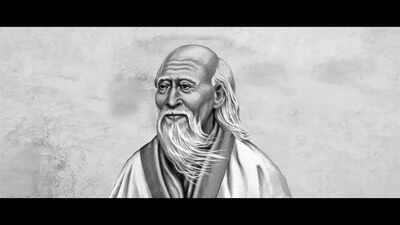
Lao Tzu, or Laozi, was a Chinese philosopher who founded Taoism and authored the Tao Te Ching, a classic Taoist text. He wrote the book when he got disillusioned with his job at the court of the central Chinese Zhou Dynasty, where he used to work as a record keeper. Owing to the rising corruption, he left the job and travelled to the far reaches of China and came up with his pearls of wisdom.Historically, Lao Tzu was a semi-legendary figure believed to have lived around the 6th century BCE, making him an older contemporary of Confucius. However, historians debate whether he was a single real person, a composite of several sages, or a legendary figure created to ground Taoist ideas. Legend says Confucius once met Lao Tzu to ask about rituals and left comparing him to a dragon—mysterious, unfathomable, and soaring beyond human reach.Lao Tzu’s classic statement from Chapter 81 of the Tao Te Ching states the one thing that sets apart truth from lies. ‘Truthful words are not beautiful; beautiful words are not truthful’
Core philosophy of Taoism
Central to Taoism is the concept of the Tao which is the raw, unvarnished, ultimate nature of the universe. The Tao operates without performance, drama, or the need to sell itself. Nature simply exists. A mountain does not try to convince you of its grandeur, and a storm does not craft an argument for why it is raining. Reality is quiet, direct, and inherently indifferent to whether human beings approve of it or not.Because truth belongs to this natural order, real truth is almost always simple, blunt, and unadorned. It does not wear makeup. Truthful words exist merely to point at what is real, which means they often feel plain, uncomfortable, or jarring to human ears. They do not cater to human ego, comfort, or desire. When someone tells you an objective truth—whether it is an uncomfortable fact about your own behavior, a hard reality about mortality, or a simple accounting of a difficult situation- it rarely feels slick or pleasant. It feels like a rock: cold, hard, and undeniable.
Lies are beautiful
On the other hand, lies are beautiful; they are designed and manufactured. They are meant to please, comfort, praise and create delusion. When words are tailored to sound beautiful, their primary target is not reality, but the human psyche. Beautiful language seeks to satisfy what the listener wants to hear, rather than what actually is. Lao Tzu observes that the moment someone prioritizes making language sound pleasant, smooth, or elegant, they necessarily drift away from the raw truth. To make a hard reality look pretty, you have to trim its sharp edges, smooth over its uncomfortable details, and polish its surface. The beauty of the speech becomes a veneer that masks the messy, uncooperative nature of reality underneath.A “good” word, in the Taoist sense, is a phrase rooted in genuine goodness, integrity, and alignment with the natural way of things. Goodness does not force itself upon others. It does not maneuver, manipulate, or push. Someone who speaks out of genuine goodness presents the facts as they are, leaves them on the table, and allows the truth to stand on its own feet. There is no hard sell, no urgency, no psychological leverage, and no emotional arm-twisting. The speaker feels no desperate need to conquer the mind of the listener, because the truth requires no force to exist.Persuasion, however, is an exercise in power. To persuade someone means to actively alter their mind, to bend their perspective, and to lead them away from their own organic perception toward a conclusion you have designed for them. Persuasive words rely on technique. They leverage fear, hope, pride, vanity, and logic traps. They use cadence, repetition, and targeted emotional triggers to bypass a person’s natural discernment. In the eyes of Lao Tzu, the very act of trying to force persuasion is inherently suspect. It implies that the speaker does not trust the truth to be convincing on its own merits, or worse, that the speaker is pushing something artificial that requires clever marketing to be accepted.