
 Vinay Kumar
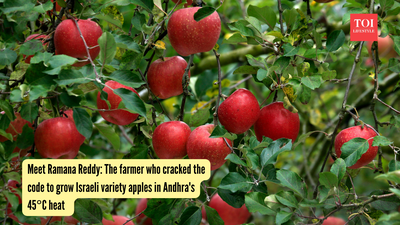
For most of us, apples come with a built-in mental postcard, situated in cool mountain air, terraced orchards on Himalayan slopes, and crates transported down from Kashmir, Himachal Pradesh, or Shimla.The fruit has always felt like something that belongs to cooler places and is often associated with the crop of the hills, not the plains. Growing it somewhere hot and dry seems nearly impossible and against the rules of nature.But recently, a farmer from Andhra Pradesh reversed the story, doing so in one of those states in the country where the weather remains sultry round the year.
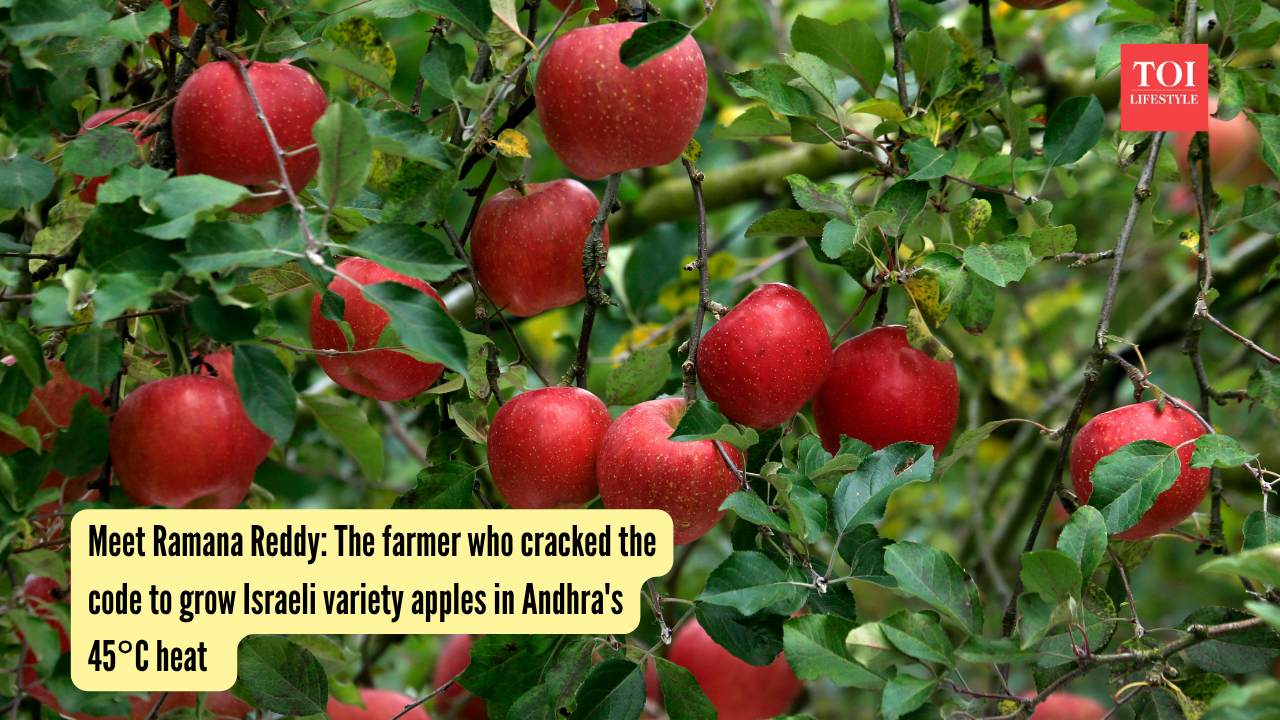
Representative Image
Meet farmer Ramana Reddy , who grew apples in Andhra Pradesh, where the temperature remains 45°C
Anantapur, in Andhra Pradesh’s Rayalaseema region, is not where anyone expects to find apples. Summer temperatures go past 45°C, and the district receives some of the lowest rainfall in peninsular India.Yet in Kotanka village, in Garladinne mandal, 46-year-old farmer Ramana Reddy has raised a bumper crop of bright red apples. According to Deccan Herald, the achievement is being seen as the first commercially viable apple cultivation in Andhra Pradesh.
How an Israeli variety made it possible
According to Deccan Herald, a conversation with a friend working in Israel introduced Reddy to a heat-resistant apple variety developed by Israeli agricultural scientists specifically for arid, high-temperature conditions. He planted it on a 2.5-acre plot.The numbers show how much of a gamble it was. According to a PTI report, Reddy bought saplings from Israel at around Rs 280 per plant, spending roughly Rs 4.2 lakh on 1,500 saplings, and used a 12×6 spacing method. That first crop yielded about one tonne of apples, medium-sized, and by all accounts good to eat.
What surprised observers most was the economics
Reddy’s apples fetched up to Rs 170 per kg for top grade and Rs 120 per kg for medium grade, while apples from Himachal Pradesh and Jammu & Kashmir typically sell for Rs 50 to Rs 100 per kg. Ripening off-season and far from the Himalayan supply chain, the southern fruit reached the market when competition was thin.The wider promise hasn’t gone unnoticed. “Apple cultivation has emerged as a novel horticultural activity in select mandals of Anantapuramu district…with early-stage results showing viable fruiting, good taste,” an official said to PTI.
What happens next
The Andhra Pradesh government is now evaluating whether the model can be scaled up, with around 15 acres across Garladinne, Kundurpi, and Peddapappur mandals already brought under apple cultivation.