Vinay Kumar
The 250th anniversary of American independence should have been a moment of clarity, a reaffirmation of the principles that gave birth to a republic. Instead, it has revealed a profound contradiction at the heart of contemporary political life. At a time marked by war, economic strain, and institutional breakdown, Donald Trump chose to celebrate not the rejection of monarchy, but its legacy. In welcoming King Charles III to Washington with ceremonial grandeur, he praised the British Empire’s culture, character, and creed, presenting the United States not as a nation born in defiance of empire, but as its natural heir. Such a portrayal is not merely historically inaccurate; it signals a deeper uncertainty about whether the United States still understands itself as a republic grounded in popular sovereignty, or whether it is drifting toward an imperial identity it once rejected.
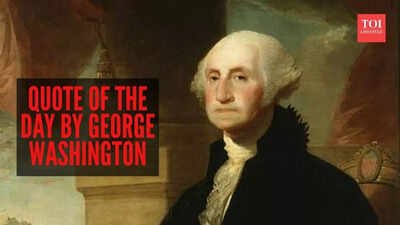
The American Revolution constituted a decisive rupture with monarchy and imperial rule. It was not an extension of British political culture but a rejection of it. The Declaration of Independence established that sovereignty resides with the people, not with a crown or inherited authority. This position diverged sharply from European traditions shaped by thinkers such as Thomas Hobbes and John Locke, whose frameworks, despite their differences, remained tied to hierarchies of power and property. The American founders advanced a more radical proposition: that human beings possess inherent dignity, rational capacity, and the ability to pursue the common good. Government, in this view, exists to cultivate these qualities rather than restrain them under the authority of a sovereign ruler. To celebrate monarchy at the symbolic center of American governance is therefore to invert the very principle upon which the republic was founded.
The historical record of the British Empire further complicates any attempt to romanticize its legacy. Its expansion across continents was accompanied by systemic exploitation and human suffering on a vast scale. In India alone, colonial policies contributed to catastrophic famines, including the deaths of approximately three million people during the Bengal Famine of 1943, while millions of others endured prolonged deprivation, economic dislocation, and political subjugation. Similar patterns of extraction and repression marked other regions under British control. Any contemporary praise of imperial heritage that omits these realities risks perpetuating a selective and deeply misleading narrative of history.
India’s own trajectory offers a powerful counterpoint. After nearly two centuries under British rule, it emerged in 1947 as a sovereign republic, consciously rejecting the structures and assumptions of empire. India can take legitimate pride in having dismantled colonial authority and established a democratic framework rooted in its own constitutional vision. While the challenges of governance in a diverse and populous nation remain significant, the foundational principle is clear: legitimacy derives from the will of the people rather than from inherited power. At a moment when elements of Western political discourse appear to revisit imperial nostalgia, India’s experience stands as a reminder that genuine independence requires a decisive break from such legacies.
The present global context is defined by mounting pressures that further expose the fragility of existing systems. Military expenditures continue to rise, nuclear risks are increasing, and economic instability is affecting populations across regions. At the same time, the institutional frameworks designed to manage crises are under severe strain. The United Nations and its affiliated agencies, including the UNHCR, the World Food Programme, and the UNRWA, face funding constraints, political pressures, and operational limitations. These challenges have made it increasingly difficult to deliver humanitarian aid, support displaced populations, and respond effectively to emergencies. As crises multiply, particularly in relation to refugees, the gap between global needs and institutional capacity continues to widen.
Within this environment, the policies of the United States have contributed to uncertainty rather than stability. The pressure exerted on countries such as India to alter their energy partnerships illustrates this dynamic. By discouraging the purchase of Russian oil, the United States has effectively pushed India toward more volatile and expensive global markets, resulting in significant additional costs. The shift away from stable, long-term agreements toward fluctuating spot market prices has imposed a financial burden measured in billions, underscoring the broader pattern whereby strategic decisions are shaped less by mutual benefit and more by geopolitical leverage.
As these dynamics unfold, countries in the Global South are reassessing their positions within the international system. Nations such as India and China are central to an emerging multipolar framework in which power is more widely distributed. This shift does not necessarily imply confrontation with existing powers, but rather reflects an effort to reduce dependence on structures that no longer guarantee stability or fairness. The transition toward a more diversified global order is therefore both a response to systemic strain and an opportunity to reshape international cooperation on more balanced terms.
A more reflective perspective on these developments emerged during a recent encounter in Copenhagen with Thant Myint-U, who was presenting his book Peacemaker: U Thant and the Forgotten Quest for a Just World. His grandfather, U Thant, played a critical role during the Cuban Missile Crisis, helping to mediate between the United States and the Soviet Union at a moment when nuclear conflict appeared imminent. When asked about the lessons for the present, he emphasized the importance of strong international institutions and genuinely neutral countries capable of mediating conflicts and limiting the reach of imperial ambitions. This perspective underscores the continuing relevance of diplomacy and institutional integrity in preventing escalation and maintaining global stability.
Taken together, these developments suggest that the Anglo-American order which has shaped global affairs for decades may be entering a period of decline. Economic dominance is no longer uncontested, political cohesion is weakening, and strategic direction increasingly appears reactive rather than coherent. The symbolic embrace of monarchy within the United States, particularly at a moment meant to commemorate its rejection, reflects a deeper uncertainty about national identity and purpose. Whether this represents a temporary inconsistency or a more enduring transformation remains to be seen.
Disclaimer
Views expressed above are the author’s own.
END OF ARTICLE