Vinay Kumar
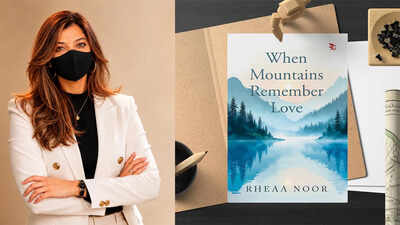
In a literary culture often drawn toward speed, spectacle, and instantly dramatic storytelling, Indian author and poet Rheaa Noor has developed a noticeably quieter creative identity. Her work is interested in the emotions people struggle to explain: memories that refuse to disappear, love that survives silence, grief that changes the meaning of a place, and the slow process of becoming visible after years of feeling overlooked.Rheaa’s work spans literary fiction, magical realism, contemporary romance, Gothic mystery, psychological suspense, horror, poetry, and LGBTQIA+ literature. Although her books differ in tone, genre, and setting, they are connected by a recognisable emotional concern: the desire to understand how people carry their past while attempting to create a more honest future. She says, “My stories frequently explore love, identity, memory, belonging, resilience, loss, and the complicated human relationships that shape who we become.” Known for emotionally layered narratives and memorable characters, Noor moves between genres without abandoning the intimacy at the centre of her writing. A mysterious library, a crowded wedding, a remote monastery, a haunted palace, or a fractured family may provide the setting, but the real subject is often what remains unspoken between people. Her fiction asks what happens when hidden pain, neglected history, or unfinished love finally demands acknowledgment.Trusting silenceOne of the most distinctive qualities of Rheaa Noor’s writing is her willingness to let emotion develop gradually. Her characters do not always announce what they feel. “Their pain appears through hesitation, unfinished conversations, familiar objects, hidden rooms, old artworks, libraries, family rituals, and landscapes that seem to preserve the past,” she says. This restraint gives her work emotional credibility. Instead of simplifying love into attraction or grief into sadness, Noor writes about the complicated space between them. “My characters may want connection while fearing exposure. They may search for belonging while remaining uncertain about where home truly exists. They may also be competent, thoughtful people whose private wounds remain invisible to the world around them,” she adds. In conversations around her book When Mountains Remember Love, Noor has described her fascination with the idea that people and places carry memories beneath the surface. “Restoration becomes more than the repair of an object; it becomes a metaphor for recovering identity, reclaiming a neglected voice, and recognising the histories that institutions or families have chosen to overlook. This sensitivity to what has been erased is one of the most consistent threads in my work,” she says.A storyteller across genresNoor’s range is unusually broad. She writes literary and emotionally reflective fiction, but she is equally willing to enter the warmth of contemporary romance, the unease of Gothic mystery, the tension of psychological suspense, and the darker imaginative terrain of horror. Her engagement with LGBTQIA+ literature is similarly rooted in character rather than category. Queer relationships in her work are allowed tenderness, vulnerability, desire, uncertainty, conflict, and hope—the full emotional range routinely granted to any meaningful love story. This genre movement does not make her body of work feel scattered. Instead, it reveals a writer interested in testing how the same human questions change under different narrative conditions. Her published work includes novels and poetry collections that demonstrate both her versatility and her distinctive emotional voice. Across these titles, she returns to people who are trying to rebuild trust, recover recognition, or understand why the past continues to shape the present.A look at some of her worksThe Library That Remembers: This emotionally layered novel is set around a mysterious library in a rain-soaked town. The story brings together grief, love, memory, and healing, following characters whose emotional histories become inseparable from the place around them. The library is not simply a backdrop; it functions almost like a witness.Blame It On The Wedding Season: This novel reveals Noor’s lighter, more playful side. Set against the colour, chaos, humour, and emotional intensity of a Jaipur wedding, it follows a romance shaped by family celebrations, chemistry, carefully made plans, and the inevitable complications that arise when people are surrounded by expectation.Shaadi, Secrets and Second Chances: In this romantic mystery, a grand wedding at Chandrakothi becomes entangled with hidden histories and an unfinished love story. Tara and Arjun begin noticing disturbances within the palace as their own wedding approaches. Romance, family drama, mystery, memory, and the supernatural come together in a narrative that develops one of Noor’s recurring ideas: some stories are not truly over simply because people have stopped speaking about them.When Mountains Remember Love: Perhaps Noor’s most ambitious work so far, this novel blends literary fiction, mystery, magical realism, art restoration, and a tender sapphic love story. It follows Anaya, a mural restorer who travels to a remote Himalayan monastery after being denied recognition for her work. As she uncovers hidden images beneath an old mural, she also begins recovering neglected histories and buried parts of herself. Her relationship with Tsering grows through trust, shared silence, and the recognition of identities that the world has often pushed aside. The novel’s exploration of creative erasure is especially significant.Things I Wish Someone Told Me Before Love, Between Mountains & Lanterns, and Lanterns for the Dark: Noor’s poetry gives her a more direct form in which to explore inner experience. Things I Wish Someone Told Me Before Love and Between Mountains & Lanterns extend her interest in love, emotional survival, silence, and the lessons people often understand only after loss. Lanterns for the Dark, associated with her early public literary journey, similarly reflects her recurring search for light within difficult periods. Across these collections, poetry becomes both confession and conversation.Why her writing mattersNoor’s writing matters because it gives emotional complexity to experiences that are frequently simplified. Her female characters are not defined only by romance; they are artists, researchers, professionals, caretakers, and individuals trying to recover authority over their own lives. Her queer characters are not present merely to represent a category. They are permitted the ordinary and extraordinary dimensions of human intimacy: longing, humour, miscommunication, vulnerability, courage, and the possibility of happiness. Her use of setting is equally significant. A library, a wedding palace, a Himalayan valley, a monastery, or a haunted space is never simply decorative. Each place contains emotional history. There is also a strong ethical quality to her storytelling. Noor believes literature can foster empathy, challenge perspectives, and create meaningful conversations. Based in Bengaluru, Rheaa is an active member of India’s literary community. She regularly reviews books, supports emerging authors, and advocates for authentic storytelling. This engagement matters because it places her work within a larger culture of reading and creative exchange. Writing under a pen name, she prefers to let her stories speak for themselves. The choice reflects the quiet confidence of her literary identity: the work remains central, while the author allows readers to meet her through the emotional worlds she creates.A literary voice that’s expandingRheaa Noor’s bibliography shows an author willing to move between forms without losing her central voice. Poetry allows her to write directly about inner experience. What connects her books is not one genre but one question: what happens when something long hidden finally asks to be acknowledged? “I am drawn to the moment when a person can no longer abandon the truth within. Through stories of grief, resilience, memory, recognition, and renewal, I write for readers who have ever felt overlooked, emotionally displaced, or uncertain of their own voice,” she says. Her work does not promise that healing is simple. It suggests something more believable: healing begins when people stop denying what they have carried, and when they find the courage to be seen without surrendering the complexity of who they are.