
 Vinay Kumar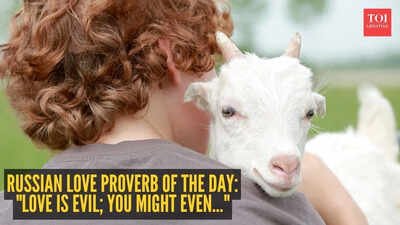
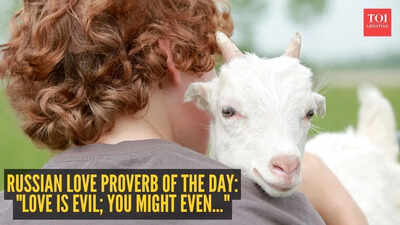
Russian love proverb “Lyubov’ – zla, polyubish’ i kozla”Translation: “Love is evil, you might even fall for a goat.”Meaning: Love is blind.This Russian love proverb is witty and very human. It sounds like a playful warning: love is a tricky thing that can make you see the world in strange ways. But underneath its humour lies a timeless truth: love is blind. It doesn’t care about logic, status or even practicality. When love strikes, you can find yourself drawn to someone who doesn’t quite fit the picture you had in mind. That’s the goat: not an insult, but a gentle, funny symbol for the unexpected, the impractical, or the simply “not supposed to be.”The proverb’s charm comes from its mix of irony and warmth. Calling love “evil” isn’t meant to terrify you, it’s a teasing way of saying love is unpredictable, sometimes reckless, and occasionally inconvenient. It’s the kind of “evil” that makes you do silly things: send midnight messages, forgive too quickly, or convince yourself that a messy person is actually “full of potential.” And yes, sometimes that leads to falling for someone who, by all reasonable standards, might be a bit of a goat.
Why “a goat” becomes the perfect metaphor
Goats are often seen as stubborn, quirky, or a little absurd. In Russian folklore and everyday language, they’re not the most romantic figure. But that’s exactly why the image works. It’s not about judging your partner; it’s about acknowledging that love can make you overlook the obvious. When you’re in love, you might ignore flaws, rationalize bad behavior, or fall for someone who doesn’t match your usual type.The goat becomes a playful shorthand for that blind spot.Love’s “evil” isn’t malicious; it’s the kind of trouble that feels exciting, even when it’s messy. It’s the force that makes you chase a connection that doesn’t quite fit, or stay in a situation that’s hard to explain. That’s not because you’re foolish; it’s because love overrides logic. It’s the emotional shortcut that says, “I don’t care why, I just care that I feel this.”The humor in the proverb also softens the sting.Instead of scolding you for being naive, it laughs with you. It says, “Yeah, love makes you do weird things. Welcome to the club.” That lightness makes it easier to accept the truth: sometimes you fall for the inconvenient, the imperfect, or the unlikely. And that’s okay.
What this teaches us about relationships
The proverb teaches us that love is not always rational, and that is what makes it beauty. When we realize that love can make us see a goat as charming, we are less likely to shame ourselves or others for weird attractions.We also learn to be gentle with our own choices. If love blinds us, we don’t need to panic – we just need to stay aware. We can ask: “Am I seeing this person clearly, or am I just in love with the feeling?”It also encourages honesty. If you’re in love with someone who’s a bit of a goat, it’s okay to admit it. The humor in the proverb gives you permission to say, “I know this doesn’t make sense, but I feel it.” That kind of honesty can strengthen relationships, because it means you’re not pretending everything’s perfect.
Love is blind
This Russian proverb reminds us that love is messy and unpredictable.But that’s also what makes it powerful. When love blinds you, it doesn’t mean you’re losing your mind. It means you’re opening your heart beyond logic. And sometimes, that’s where the most surprising connections happen.So if you’ve ever fallen for someone who doesn’t fit your plan, or stayed in a relationship that feels a little goat-like, remember this: it’s not a mistake. It’s love doing what it does, making you see the world in a way that’s complicated, funny, and deeply human.“Love is evil; you might even fall in love with a goat” isn’t a warning to avoid love. It’s a wink to anyone who’s been caught in its trap. And it says, with a smile: welcome to the beautiful, ridiculous, blind side of love.