 Vinay Kumar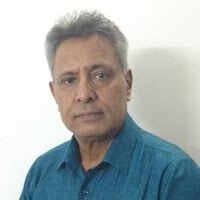
The other day we were discussing the falling standards of ‘Leadership’ world over . Strange personalities are ruling the planet . Elected by dubious means they manage to stay in power for long even when a large section of population dislikes them . Well ! there could be many reasons but to my mind the most dominant was the fact that this was an age of ‘E’ Leadership!
Leadership attained not by close intimate contact with the people but by ‘E’ means -social-media , internet, IT cells, Twitter(X ) handles , visual media /Television etc. Leaders have realised that it was easier to connect and control people through ‘E’ means than by tiresome physical contact . Followers are generated through Twitter handles and an Army of supporters is erected in no time to fight and harass the rivals , to shut them down on the ‘Twitter battle fields’ . No more the fight and struggle is on streets but is generated and raged on social media.
Have we examined our ‘Lok Sabha’ and ‘Rajya Sabha’ ? The most vocal people are entrenched in ‘Rajya Sabha’ as it requires no mass base but are elected by the already elected legislatures of State assemblies . The upper house –‘Rajya Sabha’ was created to nominate people who may not be able to get elected but have ‘value’ in society -scientists, scholars, poets , writers , professional whose advise would benefit policy formation and the Nation. It is not so now and has become an abode of political pensioners . Some of them have good communication skills in English and seem impressive but may not be able to garner any votes by public contact in elections . Unfortunately true representatives local language speakers, who are in ‘Lok Sabha’ are shy of speaking in parliament which requires communication skill of a different kind , skills which may not be of much use in ‘election campaigns’ . Further the rise of individualism and projection of one man as the flag bearer of the party has rendered many elected representatives superfluous because they are mostly winning in the name of their projected leader . Therefore this concept of ‘E’ leadership hampers growth and value of traditional door to door ‘man to man’ contact and campaigns.
‘E’ Leadership is flourishing on account of the blind followership too . The critical factor in the concept of ‘leadership ‘ was ‘followership’ . Leaders are incomplete without followers and when followers do not resist or oppose the convenient and insensitive ‘E’ leadership there is very little hope of reform . With the ‘mobile set’ in their hands their world now resides in their hands ! They prefer to connect and be stimulated by the ‘E’ world of mobile – the new ‘opiate’ candy in their hands! Have we not witnessed in recent times how difficult it was to get people to meetings on their own and therefore it has now become a routine and standard practise to transport in buses and vehicles loads of people from nearby towns and villages , lure them with food and money to attend a ‘political rally’ .
The relationship between leaders and followers has become a ‘transactional relationship’ where the leader makes many promises of ‘freebies’ in election manifestoes and the ‘followers’ fall for it . As if there was only ‘material’ relationship between them . In the years gone by the direct contact with the masses was ‘give and take ‘ and many ideological issues were discussed but the arena of ‘E’ leadership is so fragile that in order to attract followers the leader has to continually create a sense of ‘fear’ ‘greed’ or ‘hatred’ . The political parties are now unabashedly employing the transactional trick and just prior to voting attractive financial assistance are doled out under the garb of the ‘existing policy’ which sways the voters considerably and the election results are turned around. What is the need of ‘public contact ‘ in such cases?
We should remind ourselves that the Ancient and traditional leadership germinated and rose during various conflicts and battles . The relationships were cemented on the sacrifice of ‘ sweat , blood and tears’ . There was constant ‘rubbing of shoulders with men’ . A King or Monarch was expected to lead his soldiers in battles, win them and then would wear the Crown . ‘Alexander the Great’ rose from the land of Macedonia and marched up-to the India borders winning battles on the way with his followers . He returned on the advise of his followers. His name in etched in history and our collective memory and is often taken in our routine conversation . Some names of Hindi films are after his name –‘Sikandar’ directed by Sohrab Modi and starring Prithvi Raj Kapoor in the title role, ‘Muqqaddar ka Sikandar ‘ directed by Prakash Mehra and starred Amitabh Bacchhan and ‘Jo Jita wo Sikandar’ starring Amir Khan . All very popular and successful films.
We witness ‘Mahabharat’ regularly because we marvel the manner in which our leaders/warriors fought -Arjun , Karan , Bhishma Pitamah , Abhimanyu and Dronacharya. Their names are part of our vocabulary and Military institutions/weapons have been named after them . ‘Arjun’ tank of Army , ‘Dronacharya’ – the gunnery school of Navy , ‘Abhimanyu’ Navy’s commando training establishment etc. Similarly in Modern and medieval times we have names such as Maharana Pratap of Chittorgarh who along with his famous horse Chetak fought bravely against Akbar in order to preserve his independence. Chhatrapati Shivaji who took the empire of Aurangzeb head on and often with few men in guerilla style attacks. Rani Laxmi Bai of Jhansi who fought during the first war of Independence on a horseback leading her forces against the British and did win initially till she was betrayed. Their names adorn our memories and many institutions all over India. Subhash Chandra Bose gave slogan ‘Jai Hind ‘ ‘ Dilli Chalo’ and ‘Tum Muzhe khoon do Mein tumhen Azadi doonga’ ( you give me your blood and I shall give you freedom) and many India army POWs in Singapore joined his INA ( Indian National Army) which also won battles initially. Gandhiji united India against the British by means of what was common cord -Salt, Khadi and vernacular languages and the sermon of ‘satyagraha’ . The Nation was never so united in History as was during his time and continues to do so. All this happened by ‘physical contact’ with the masses. The China that we see today was consolidated by the ‘Long March of China’ led by Mao Zedong who led about hundred thousand troops of the Red Army from one region to the other travelling in hostile terrain about 10000km in a year’s time Oct 1934 to Oct 1935, only about 8000troops survived the arduous journey but then the Red Army consolidated itself and struck back.
The classical /traditional approach is still practised by certain individuals such as ‘Baba Ramdev’ who established contact with masses by holding ‘Pranayama’ camps all over the country and soon had a massive following so much so in the matter of unearthing ‘black money’ he gave ultimatum to the Government and the Finance Minister of India had to meet him and give assurance. Sri Sri Ravi Shankar is one other example . Both have created huge commercial empires on the basis of ‘ people’s support’
The ideal/traditional/classical approach to Leadership is practised in The Armed forces only and therefore it remains a ‘mirror’ to the prospective leaders of tomorrow . Armed forces can only survive with ‘rubbing shoulders with men ‘ approach. ‘E’ means are there for easing management and not to be enslaved by it.
Disclaimer
Views expressed above are the author’s own.
END OF ARTICLE