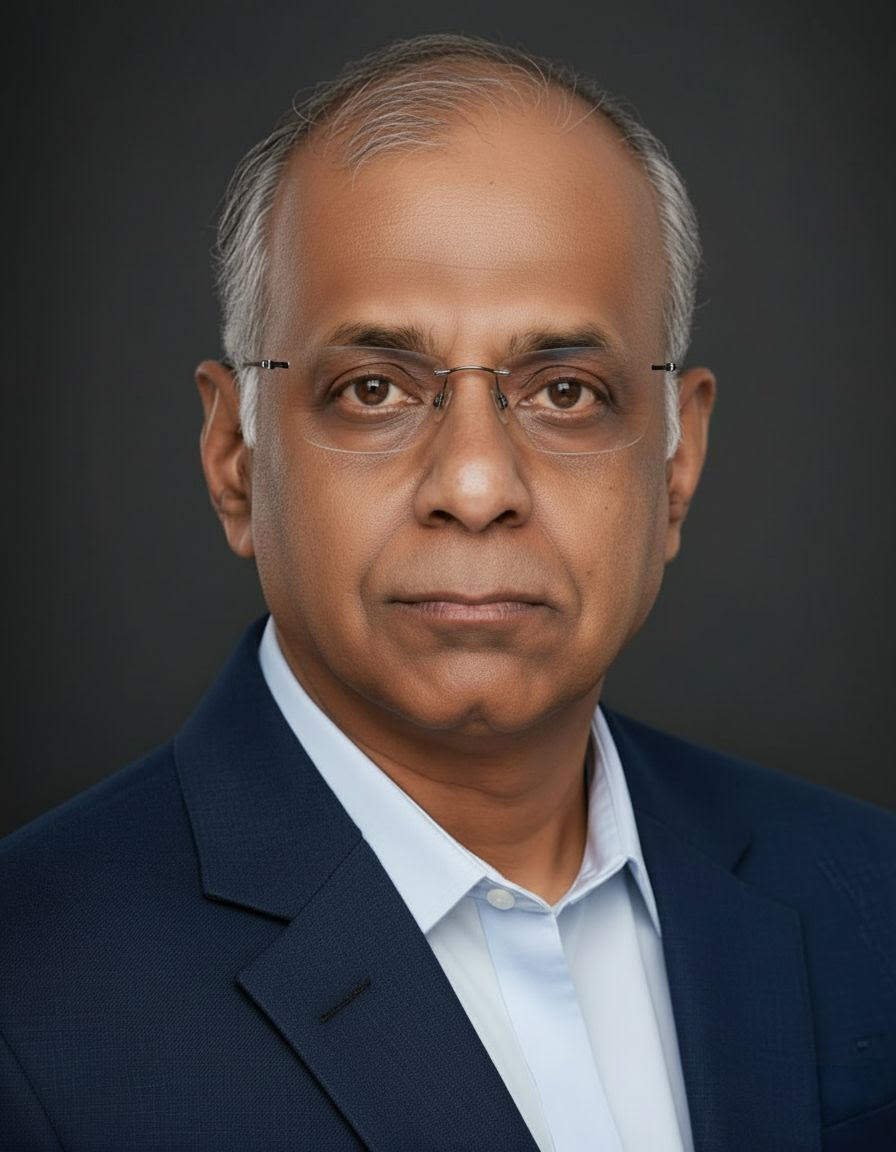
Vinay Kumar
The world talks loudly about de-dollarisation. Quietly, ordinary people are adopting the dollar faster than ever, one stablecoin at a time.
A content creator in the Philippines would receive a payment from Meta directly into her phone in USDC, a digital token designed to maintain a one-dollar value. A freelancer in Colombia will get paid instantly, without waiting days for a bank transfer or losing a chunk of the payment to fees. No international wire. No intermediary bank. Just digital dollars arriving in minutes.
Meta recently confirmed it is exploring stablecoin payouts for creators, beginning in countries like the Philippines and Colombia. On the surface, it sounds like another fintech experiment. In reality, it is one of the world’s largest technology companies quietly building a global pipeline for digital dollars.
This is the part of the global financial story many analysts are missing. Governments may be discussing alternatives to the U.S. dollar, boying oil in their currency, trading in a different currency, but on ground, millions of ordinary people are voluntarily moving towards dollar, through stablecoins.
To understand why, one distinction matters. It is not any other cryptocurrency like Bitcoin which is a speculative asset whose value swings wildly, driven by sentiment and market speculation.
Stablecoins are different. They are digital currencies designed to hold a steady value. The two dominant stablecoins USDT, issued by Tether, and USDC, issued by Circle, are backed by reserves held in dollars and short-term U.S. Treasury bills. In simple terms, they function like internet-native dollars, each holding one US dollar value and transferable instantly, globally, and at an extremely low cost.
That difference is crucial. Stablecoins are not primarily being used as investments. They are increasingly being used as a safeguard for sending money fast.
And the parts of the world adopting them fastest are not Silicon Valley or Wall Street. They are emerging economies.
For millions of workers sending money across borders, the traditional financial system is expensive and painfully slow. The World Bank estimates the average cost of remittances globally at over 6% of the transfer value. For someone sending home $300 a month, that fee matters enormously.
Stablecoins dramatically reduce those costs while settling transactions in minutes instead of days. A worker in London can send digital dollars to family in Lagos or Manila almost instantly, without requiring either side to have a traditional bank account.
That matters even more in countries where local currencies are unstable. In places like Africa, Latin America, or Asia, holding savings in digital dollars is both a financial strategy and a way to protect purchasing power. For many families, stablecoins have become preferred options of saving and moving money globally with the ease of a smartphone.
The scale of adoption is now forcing mainstream finance to act quickly.
Visa recently said its stablecoin settlement operations had reached a $7 billion annualised run rate. Mastercard announced a US$1.8 billion acquisition of stablecoin infrastructure firm BVNK, explicitly citing cross-border payments and remittances as a key reason for the deal.
The significance of this shift is difficult to miss. The world’s largest payment networks are no longer treating stablecoins as a fringe crypto experiment. They are treating them as the next layer of global payments infrastructure.
The same applies to major technology companies. Meta’s stablecoin payout pilot matters not because it involves crypto, but because it changes how real people receive real income. Meta paid creators billions of dollars across its platforms last year. If even part of those payouts move to stablecoins, digital dollars become embedded directly into the everyday earnings of millions of users globally.
Sandeep Nailwal of Polygon posted recently that ‘Bloomberg projects stablecoin payment flows to go from US $2.9T in 2025 to $56.6T by 2030. Stablecoin transactions on Polygon grew 264% YoY through 2025, and in April 2026 alone we processed more than 577M! In 5 years from now the numbers we are celebrating today will look like nothing,’ stressing exponential growth awaits and along with remittances, ‘Payments on Polygon’ is what he’s betting on.
The geopolitical implications are even larger.
In 2025, the United States passed the GENIUS Act, the first major federal framework regulating stablecoins. The law required dollar-backed stablecoins to hold reserves in cash or short-term U.S. Treasuries and established clearer regulatory oversight.
That legislation legitimised stablecoins for large institutions. Companies like Visa, Mastercard and Stripe could now expand stablecoin operations with clearer rules and regulatory certainty.
But the deeper consequence is every time stablecoin adoption grows globally, demand for US government debt grows with it. That is because the reserves backing these digital dollars are largely invested in Treasury bills.
In effect, stablecoins have created a new global distribution system for the dollar. This is not powered by central banks or diplomatic agreements, but by smartphones and private payment networks.
The numbers are already enormous. Tether alone reported more than $140 billion in US Treasury exposure earlier this year. If viewed as a sovereign-equivalent holder, it would rank among the world’s largest holders of American government debt, ahead of many countries.
While many countries are talking about steadily reducing their Treasury holdings. Stablecoin issuers are increasingly filling part of that gap. What used to be funded by governments is now done by hundreds of millions of individuals choosing digital dollars for practical everyday use.
This is the real picture that global de-dollarisation debate misses. While political leaders discuss reducing dependence on the dollar, stablecoins may actually be extending dollar dominance deeper into the global economy than ever before. Not through military alliances or trade agreements, but through convenience.
The creator receiving USDC in Manila is not making a geopolitical statement. Neither is the worker sending stablecoin remittances home to Nigeria. They are simply choosing the cheapest, fastest and most reliable financial tool available to them. But collectively, those choices reinforce the infrastructure of American financial power.
The dollar does not need to win any wars now. It has become the currency that moves best and fast when everything else does not. For millions of people across the world, stablecoins are ensuring dollarisation of our world like never before.