
 Vinay Kumar


Hello and welcome to another edition of the Weekly Vine. It has been a slightly chaotic week, thanks to the World Cup, which is playing havoc with our circadian rhythm. On the bright side, that means we have something to write about that’s not as infuriating as politics. On the flip side, the World Cup is being held amid the most politically turbulent time since World War II, in the most politically divided country, with the most politically divisive president ever. Okay, enough ranting.
In this week’s edition, we look at Kunal Shah’s meteoric rise and explain the Cred business model, examine why so many smart Indians fell for a fake Jeff Bezos quote on water, explain how Sir Alex Ferguson’s old lieutenant stopped England in its tracks, and ask why, sometimes, one’s therapist can’t get through.
The CRED model
It is fitting that the man picked to lead WhatsApp globally is not an IIT-IIM techie, but a gentleman who studied philosophy at Wilson College in Mumbai and dropped out of an MBA course, which already makes him smarter than most IIT-IIM grads.
The tech world was shocked when Meta picked Kunal Shah to lead WhatsApp globally. Then came the inevitable question, as ontological as Camus wondering about suicide: what exactly is CRED’s business model? Is it selling 90s nostalgia to millennials? Getting childhood heroes to break character? For people who understand Marx better than Mammon, the model can look strange.
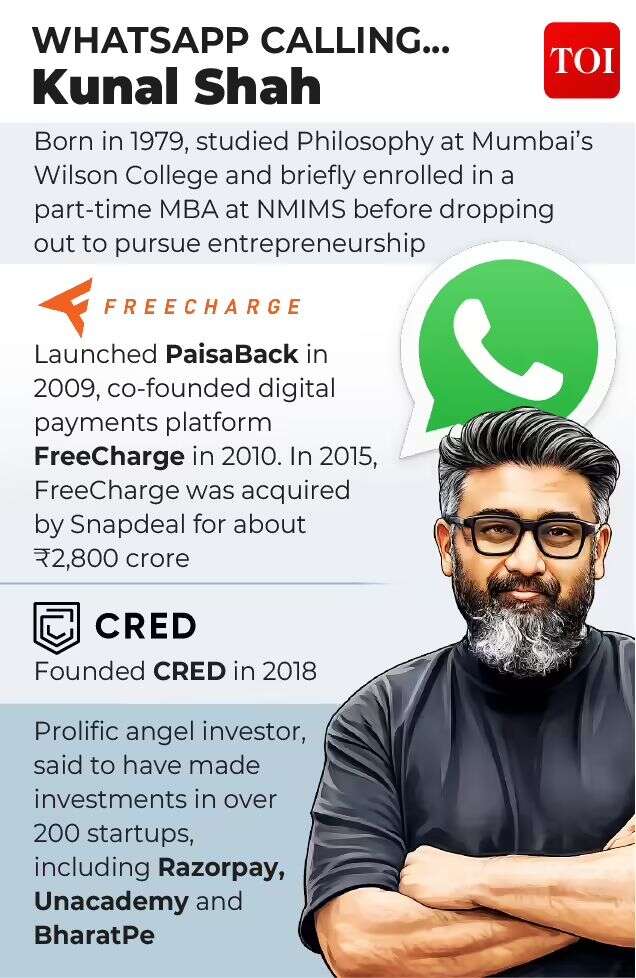

CRED starts by collecting India’s most valuable credit-card users: people with credit scores above 750. That gives it a rare moat, the kind product managers dream of in their sleep: a financially disciplined, urban, higher-spending base useful to banks, card companies and premium brands. In plain English, the crème de la crème of the upper middle class that does not appear to make its money through criminal endeavours.
Then CRED turns bill payment into a monthly habit. Coins, perks and premium-brand access make a boring chore feel faintly rewarding. But the rewards are only the hook. Once CRED has the audience and the habit, it can make money through CRED Pay transactions, lending, CRED Mint and brand partnerships.
So no, CRED does not merely have data. It has a filtered audience, repeated behaviour, trust and monetisation rails. The bet is simple: a smaller group of rich, reliable users can be worth more than a much larger crowd that arrived for cashback and vanished before the invoice was paid.
Jeff Bezos and Water

In 1996, Alan Sokal entered academia with a whoopee cushion in one hand and a flamethrower in the other. The NYU physicist wrote a deliberately absurd paper, loaded it with fashionable jargon, dressed it in the political perfume of the moment, and sent it to Social Text, a cultural studies journal that considered itself rather clever. The journal published it, after which Sokal revealed that the whole thing had been a hoax.
The lesson was savage because it was uncomfortable. Intelligent people can swallow rubbish when rubbish arrives wearing the costume of their convictions.
Nearly three decades later, the internet has turned the Sokal Affair into a daily production model. A hoax no longer needs a journal, a submission process or a title that sounds like a rejected Radiohead album. It only needs a billionaire’s face, an AI panic, a climate anxiety and the word “BREAKING” slapped on top like a cheap police siren.
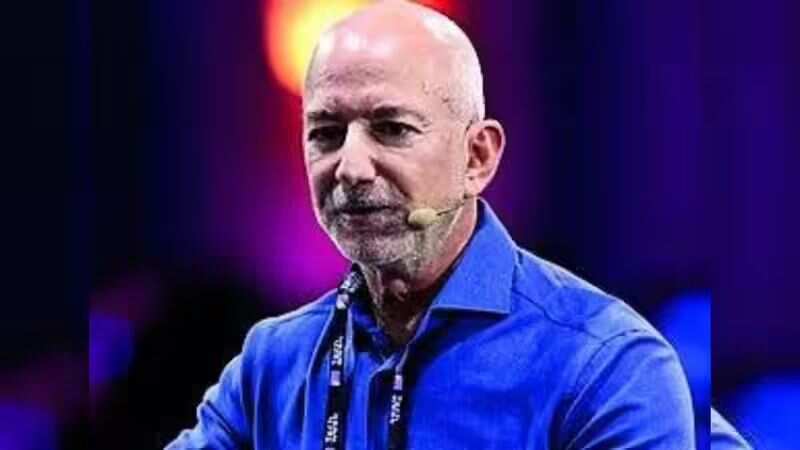
Which brings us to Jeff Bezos and the quote he appears to have never said.
The viral claim had Bezos arguing that water should be prioritised for AI data centres over human consumption. Some versions gave him the line: “Humans won’t evolve humanity. AI will.” Another dressed up the same idea in polished doom-speak about biological limits, infinite digital potential and the danger of starving data infrastructure of cooling resources merely to preserve baseline human comfort.
It sounded less like a tech conference quote and more like a Bond villain monologue written by someone who had recently discovered LinkedIn.
The serious reporting from Bezos’ VivaTech appearance focused on AI, labour shortages, his venture Prometheus, Blue Origin, the moon and the familiar billionaire dream of moving polluting industry off Earth. There is enough there to examine, question and mock without inventing a line about letting humans go thirsty so servers may dream.
The fake travelled because it had everything a modern lie requires. Bezos is already a complete cultural character: Amazon warehouses, rockets, private space dreams, unimaginable wealth and the habit billionaires have of discussing humanity as if it were an underperforming business unit. The claim did not have to build a villain; the villain had already been cast.
Then came water, which turned a policy question into a primal fear. Electricity sounds technical, but water is intimate. We drink it, hoard it in summer, fight over it in drought and remember its importance only when the tap coughs air. Once water enters the story, outrage does not need much help.
AI’s resource footprint gave the lie its runway. Data centres raise real questions about cooling, electricity, water use, local stress and corporate secrecy, but the online conversation around AI and water has already become a swamp of bad arithmetic. Annual data-centre consumption gets confused with per-query use. Cooling water gets mixed with the water used indirectly through electricity generation. Litres per year, litres per prompt and litres per image are thrown into the same bucket, after which someone kicks the bucket down the timeline.
Once the denominator disappears, every number becomes a weapon.
That is why the Bezos quote worked. It asked people to confirm something they already feared: AI is thirsty, Big Tech is secretive, billionaires are ruthless and ordinary people will be asked to subsidise a future built above their heads.
The most dangerous sentence online is, “I can imagine him saying that.” Once a claim reaches that point, evidence becomes paperwork and the fact-checker begins to sound like a nuisance. Worse, the fake helps the person it seeks to attack because it allows the powerful to deny the most absurd accusation and slide past the harder questions.
AI’s water footprint deserves scrutiny. Data-centre deals deserve scrutiny. Billionaire techno-utopianism deserves scrutiny. That scrutiny needs numbers that survive contact with a calculator.
Sokal showed that nonsense can fool clever people when it flatters the room. The Bezos quote shows that even smart people aren’t that smart.
Fergie’s General

Before he was delivering Fergie-like repartees in international football, Queiroz was the man who helped build Ferguson’s third great Manchester United side. Ferguson was a huge fan, calling him the assistant who challenged him intellectually and the “closest you could be to being the Manchester United manager without actually holding the title”.
Under Queiroz, United moved away from their swashbuckling 4-4-2 style, with two wingers and two central midfielders, towards a more flexible 4-3-3 that gave them greater balance in midfield, more fluid forwards and a counter-attacking structure that could also defend. It was the shape that helped turn United into a more serious European force. One match that stood out was Manchester United’s Champions League semi-final win over Barcelona in 2008, decided by a classic Paul Scholes goal and a defensive masterclass over two legs in which Barcelona dominated possession and still lost. One wonders if United’s two showdowns with Barcelona in the 2009 and 2011 finals might have been slightly different had Queiroz still been around.
He was also instrumental in signing players from Portugal and Brazil, including Cristiano Ronaldo, Nani and Anderson, and helped turn Ronaldo from a teenager of touch and tease into an athletic specimen who became the complete footballer, one whose rivalry with Lionel Messi would dominate almost two decades of football.
Much like his compatriot and former student Jose Mourinho, Carlos Queiroz’s first goal is to not lose, which leads to what has been dubbed “sufferball”, where both teams suffer but only one does so willingly. Against England, Queiroz had a clear structure: a disciplined mid-block, a narrow back line, Thomas Partey screening the defence, and England being forced into wide possession without becoming a serious goal threat. Ghana had no desire to win the ball high up from England’s centre-backs. Instead, they protected the middle, stifled England’s attack-minded midfielders and prevented Harry Kane from dropping into pockets and combining. As DAZN’s analysis put it, England had “width without penetration”.
POSTSCRIPT By Prasad Sanyal


My therapist says she is not getting through to me. This is not because she lacks skill or competence. On the contrary, she is intelligent, patient, observant and possessed of the sort of calm that would make an air traffic controller seem mildly excitable.
The problem is that every time she attempts to speak to the hurt, the hurt sends the rage to attend the meeting. Rage, unlike hurt, arrives prepared.
Rage has talking points.
Rage has supporting documentation.
Rage has screenshots.
Rage has a 47-slide presentation entitled “Why Everything Is Terrible and Why I Am Right About It”.
My therapist, meanwhile, has me lie down on a couch facing away from her. Apparently, this is a very old idea. Freud preferred that patients not look directly at the analyst. The theory, as I understand it, was that people speak more freely when they are not busy managing another person’s reactions. No encouraging nods or sympathetic smiles; no visible judgement – just you and your thoughts. I am beginning to suspect the arrangement was invented specifically for people like me.
Disclaimer
Views expressed above are the author’s own.