Vinay Kumar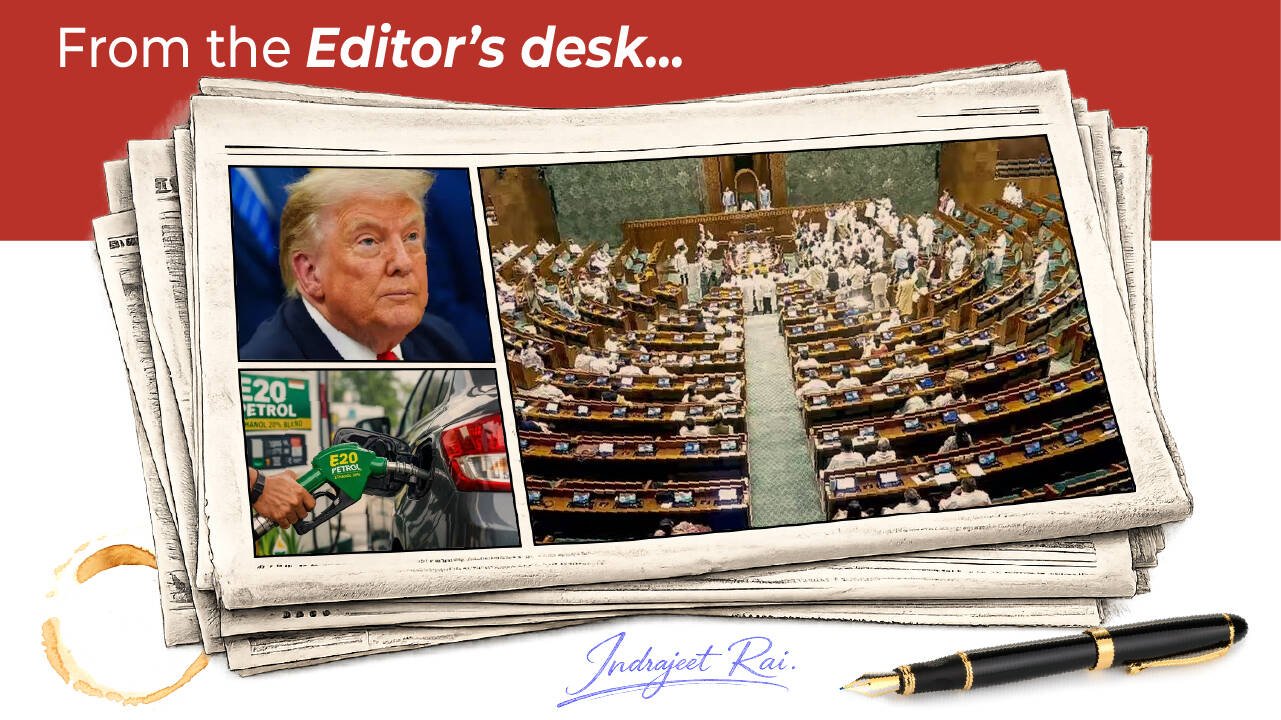
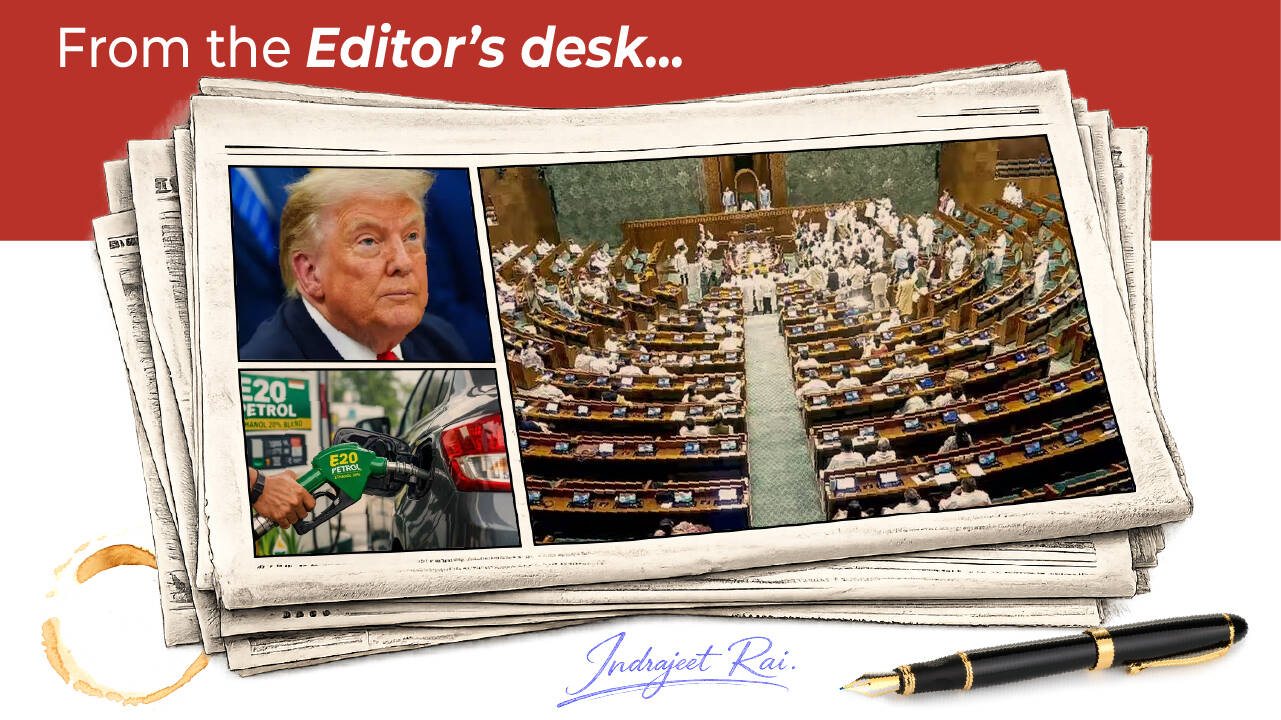

This week, we are tracking:
- Sadak vs Sansad: Why democracy cannot run on street protests alone
- World War III may already be here — It just hasn’t been declared
- No engine trouble, but mind the gaskets: Govt fine-tunes its E20 defence
- Deal or more duties: Can India escape Trump tariff trap?
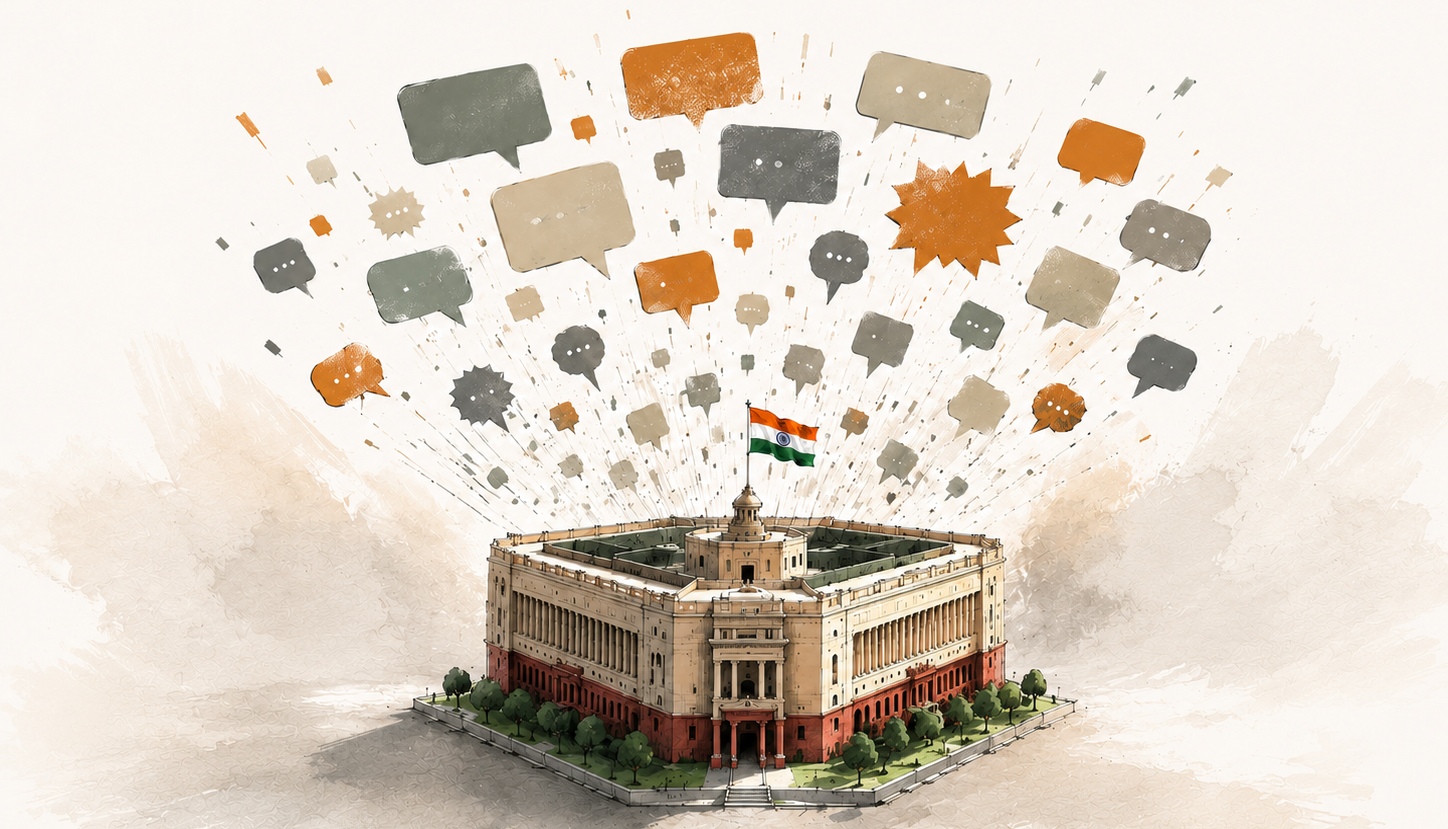
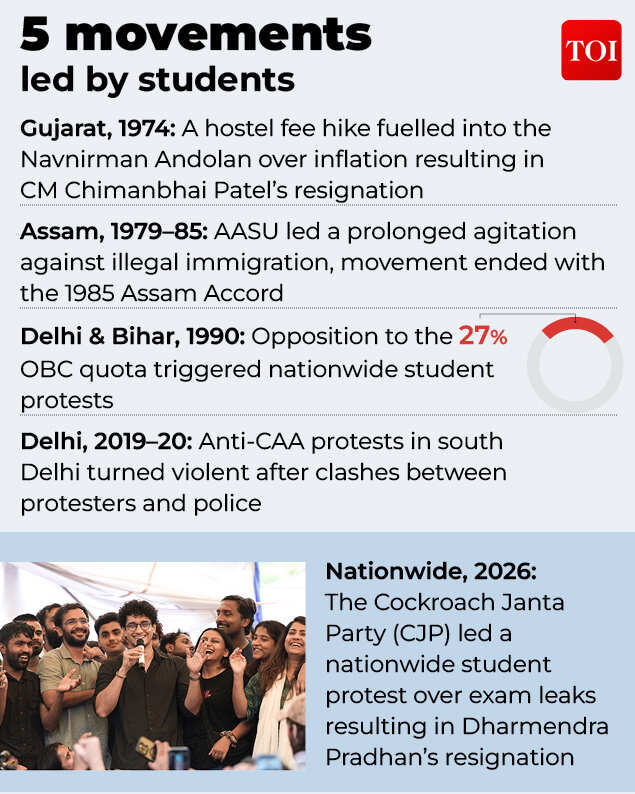
CJP protests: When Sadak overrules Sansad — What it means for democracy
resignation.

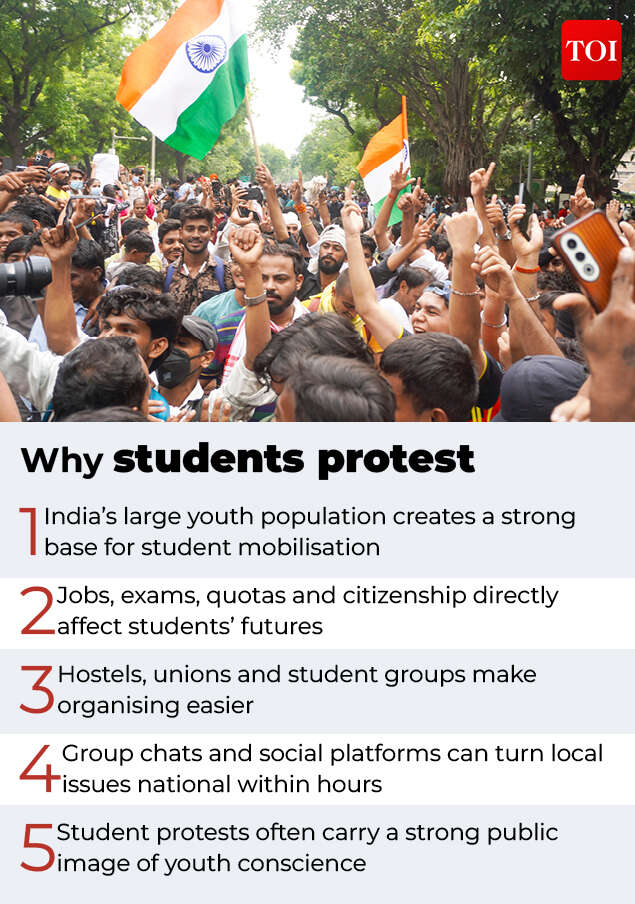
Street protests are not a problem, they are part of democracy. The trouble begins when citizens conclude that governments listen only after roads are blocked, barricades breached or images of police action go viral.

It’s not that Parliament does not function in India. The monsoon session shows what Parliament can achieve when it actually works.

After a debate over 16 hours, Parliament approved amendments to the anti-paper leak law, introducing longer jail terms and heavier fines for cheating and question-paper leaks in public examinations.
But Parliament has been functioning too sporadically. The onus to make Parliament work rests primarily with the govt. The govt can’t treat opposition as an inconvenience. The opposition, equally, cannot allow every serious debate to collapse into slogans and adjournments. Disruption creates television moments; persistent questioning and legislative scrutiny create reform.
A functioning Sansad can keep public anger from spilling onto the streets. India is a parliamentary democracy, and Sansad must remain its principal forum for debate, dissent and accountability.
Read more
Democracy’s Table Manners
July 20 protest: RAF used tear gas, anti-riot guns and plastic pellets
CJP launches website, invites proof against ‘police excesses’
Instagram vs WhatsApp: How CJP protests are different and why that matters
Over 50 nations, 3 continents: Has World War III already begun?
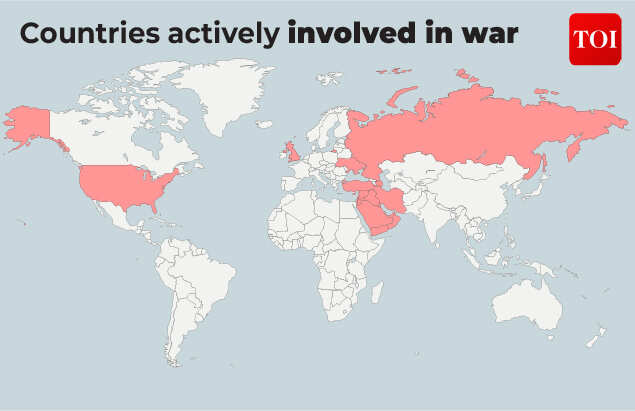

At least 16 countries are directly affected by the US-Iran war.
Then, North Korean troops are fighting for Russia. Now, Iran is reportedly preparing to receive up to 400 Chinese-made shoulder-fired air-defence systems.
In all, we have over 50 countries involved directly or indirectly in active wars.
We may not yet have a single global battlefield or two formally declared alliances. But when 50 countries across US, Europe, Asia and the Middle East are connected to overlapping wars, the uncomfortable question is no longer whether the world is moving towards a global conflict.
It is whether it has already arrived.
Read more
‘Xi, Putin assured they won’t arm Iran’: Trump says China, Russia keeping promise
US-Iran conflict spreads as new fronts open
US-Iran conflict expands beyond battlefield as Red Sea attacks open new front
CJP impact: How the govt is changing its E20 story
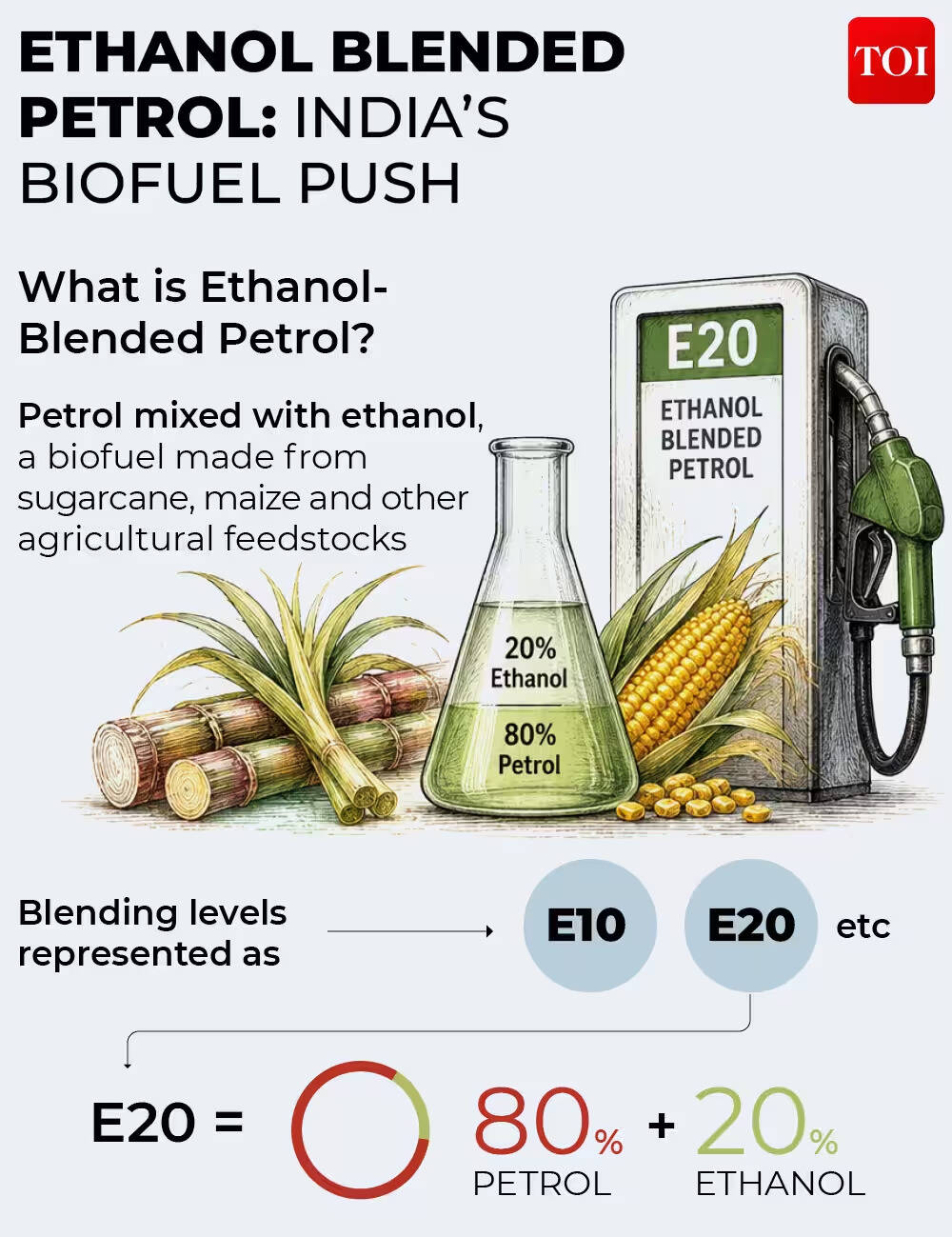

For months, the government maintained that E20 petrol caused no significant real-world problems, attributing any mileage loss largely to driving habits. It is now acknowledging that fuel efficiency may decline, though its ministries are offering different estimates.
On Wednesday, road transport minister Nitin Gadkari told Rajya Sabha that BS-III vehicles manufactured between 2005 and 2016 may require replacement of rubber parts and gaskets when regularly using E20 fuel. A day later, he told Lok Sabha that mileage in some E10- designed vehicles could fall by 2-6%, depending on driving conditions, habits and maintenance.
The oil ministry, however, told Rajya Sabha that “any reduction in fuel economy” in E10-designed vehicles are “limited to about 3-5%”. Two ministries, two estimates. But what matters is the admission, even if a modest one: The E20 is not kosher.
The timing isn’t coincidental. It has just come after CJP protests over the NEET paper leak and the formation of E20 Janata Party(EJP).
Read more
Mileage drop due to E20? 2-6%, says 1 minister, 3-5%, says another
‘No abnormal wear & tear’: Centre reiterates E20 safe for vehicles
Deal or more duties: Can India escape Trump tariff trap?
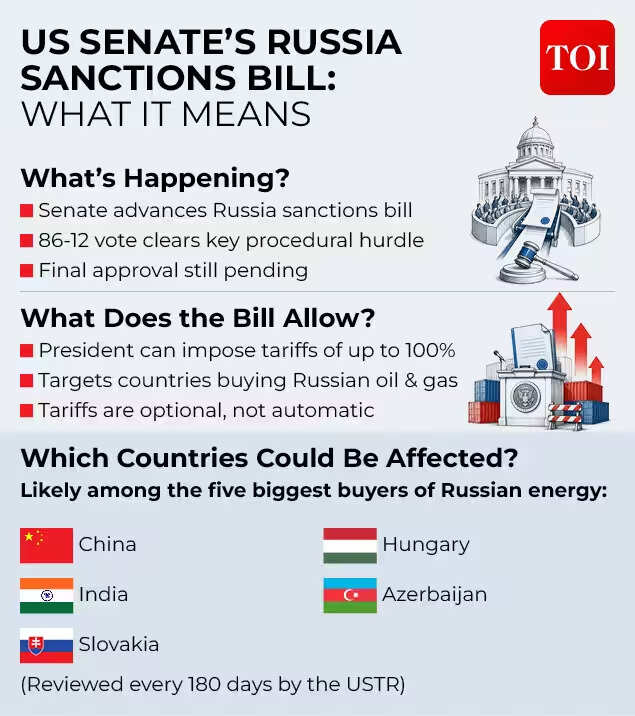

The US has imposed an additional 10% tariff on Indian goods under a new forced-labour-linked regime covering 60 trading partners. The bigger danger, however, is not the 10% tariff already imposed. It is the possibility of much heavier duties linked to India’s purchases of Russian energy.
The US Senate has advanced a sanctions bill that would allow Trump to impose tariffs of up to 100% on goods from the five biggest purchasers of Russian oil and gas. India is among the countries potentially exposed.
That leaves New Delhi with an uncomfortable calculation. Russian crude remains useful, particularly when instability around Iran and the Strait of Hormuz threatens Middle Eastern supplies. Indian refiners have recently increased purchases as discounts recovered and supply
concerns grew.
Deal or duties?
A US-India trade deal is quite possible and it may happen in the coming months. But the tariff trap is now clear: They are being used to influence India’s foreign-policy choices. Escaping it will require a bargain broad enough to satisfy Trump, but flexible enough to preserve India’s strategic autonomy.
Read more
India faces 100% Trump tariff threat as US Senate advances Russia Sanctions Bill – what it means
India-US trade pact: Piyush Goyal explains the one condition to seal the deal
Editor’s picks: Some of our most and must-read articles
‘India’s identity has always been blue’: Former captains slam saffron hockey jersey
India may soon get plastic notes: Why they are being introduced and what happens to paper money
‘Clock it’, ‘delulu’: How Gen Z lingo took over Parliament during anti-paper leak Bill debate
Sarnath’s ancient Buddhist site now a world heritage site: UNESCO
Disclaimer
Views expressed above are the author’s own.