 Vinay Kumar
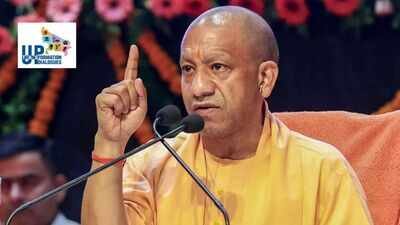
Political rivalry has its own grammar, and no politician misses an opportunity to attack an opponent. This is natural because every political party has its own ideology and electoral strategies, and the public evaluates them on that basis. However, when a ruler rises above partisan boundaries and stands for the larger interests of society, he begins to appear distinct in politics. He emerges as a leader who upholds Raj Dharma. At a time when political culture is witnessing a decline, where leaders of opposing parties are increasingly treated as enemies and political attacks have begun extending even to family members, Uttar Pradesh Chief Minister Yogi Adityanath stands above the ordinary politician by setting an example of Raj Dharma.
When certain individuals circulated misleading and objectionable content on social media regarding the daughter of former Chief Minister and Samajwadi Party President Akhilesh Yadav, Chief Minister Yogi Adityanath not only took the matter seriously and directed that a case be registered, but also sent a clear message during a public gathering in Azamgarh: “Any derogatory remark against a daughter is unacceptable. A daughter is a daughter. We have been raised with values where the daughter of the village belongs to everyone, and every sister is respected by the entire community.” Such resolve reflects the Chief Minister’s deeply rooted social values and cultural consciousness.
Political rivalry is often defined by efforts to weaken opponents, neglect their support bases, or revive controversies from the past to attack them. On social media, these methods have become even more aggressive, with the disturbing trend of dragging politicians’ families into political battles. This represents a decline in political culture that should concern every conscientious citizen. In this context, the action taken by Chief
Minister Yogi Adityanath regarding the remarks made about Akhilesh Yadav’s daughter stands as an ideal example of political conduct. It conveys the message that the use of power should not be limited to protecting the interests of one’s own party but should be guided by fairness and equality. In a democracy, differences of opinion, disagreements, and even intense debates are acceptable, but personal dignity should never be violated, nor should differences turn into bitterness.
This ideological maturity appears even deeper and more expansive in the governance of the Yogi government. Consider the development initiatives underway in Uttar Pradesh. For decades, an unwritten and partisan rule dominated the state’s politics: development would take place only where legislators of the ruling party existed. No formal order was ever issued, yet politicians, officials, and even the public understood this reality. Chief Minister Yogi Adityanath broke this culture of political favoritism.
Take the example of Azamgarh, a region once associated with terrorism, backwardness, and criminal influence. Under the priority accorded by the Yogi government, significant transformation has taken place. Politically, Azamgarh has long been a stronghold of the Samajwadi Party, first under Mulayam Singh Yadav and later under Akhilesh Yadav. Even today, the BJP has neither an MLA nor an MP from the district. Yet the Chief Minister did not choose the path of political retaliation. Instead, Azamgarh received major development projects, including the Purvanchal Expressway, a university, an airport, a music college, and much more.
CM Yogi believes that development should not be weighed on the scale of votes. Rampur exemplifies this philosophy. For years, it remained a political fortress where the wishes of a single leader effectively functioned as law. Even central and state government schemes depended on the goodwill of that leader. Once that political monopoly
was broken, inclusive development followed. Mainpuri can also be placed in this category. As the emotional heartland of the Samajwadi Party, it too benefited from government schemes. Under the Jal Jeevan Mission, drinking water reached the kitchens of homes where Samajwadi Party flags fluttered at the entrance. This reflected the principle of ‘Sabka Saath, Sabka Vikas’.
In the 2024 Lok Sabha elections, the Samajwadi Party won several seats, yet the Yogi government did not display a narrow mindset. Development work continued uninterrupted in those areas as well. Bundelkhand, which has suffered for centuries from drought and migration, may not have been an impregnable stronghold of any one political party, but it too received the gift of the Bundelkhand Expressway under the Yogi government. Looking at development beyond electoral calculations is the true hallmark of democratic maturity. Such moral courage is what governance should embody.
It would be unrealistic to claim complete political detachment in public life, but it is worth considering who governs merely for votes and who works sincerely because they regard it as their duty. When a leader identifies himself with the dignity of his political opponent’s daughter and takes decisive action to protect it, it reflects the purity of his conscience. From the Preamble of the Indian Constitution to its various Articles, the underlying spirit remains the same: the protection of the state and its resources cannot be reserved for any one class, caste, party, or region. Governance must remain impartial.
Rising above partisan considerations and working for all represents a cultural intervention in the politics of Uttar Pradesh. It challenges the mindset that assumes politics has no boundaries of propriety or morality. People may eventually forget the inappropriate remarks made about Samajwadi Party President Akhilesh Yadav’s daughter, but one thing will be remembered: Chief Minister Yogi Adityanath set an example that political power is not the enemy of humanity. When this understanding spreads across all political parties, the true and golden spirit of democracy will become even more visible.
Disclaimer
Views expressed above are the author’s own.