Vinay Kumar
The death of the Buddha is a subject that is seldom discussed, but the truth is that his Maha Parinirvana (the ultimate passing) of Buddha spread his message to the world more powerfully than ever. He breathed his last in Kushinagar. Following his funeral rites, his ashes and bone relics were equally distributed into eight caskets. Seven were given to various disciple kings, and the eighth was handed over to the family of the Buddha—the Sakya princes.

The relics were distributed among the following:
-
The Mallas of Kushinagar
-
The Licchavis of Vaishali
-
The Ajatashatrus (Magadhas) of Rajagriha
-
The Bulies of Allakappa
-
The Koliyas of Ramagrama
-
The Mallas of Pava
-
The Brahmanas of Vethadipa
-
The Sakyas of Kapilavastu (the Buddha’s own clan)
All the Sakya relatives of the Buddha offered jewels in his memory. These were placed inside the casket, which was then sealed. The casket was respectfully placed inside a sandstone box, sealed again, and buried 18 meters beneath the surface. A sacred stupa was then built over it.
Two centuries later, Emperor Ashoka is said to have opened seven of these original stupas to redistribute the relics into thousands of shrines across his vast empire.
The inscription, scratched onto the lid of a steatite (soapstone) relic vase buried deep within the stupa, was written in early Mauryan-era Brahmi script. The transliterated text reads:
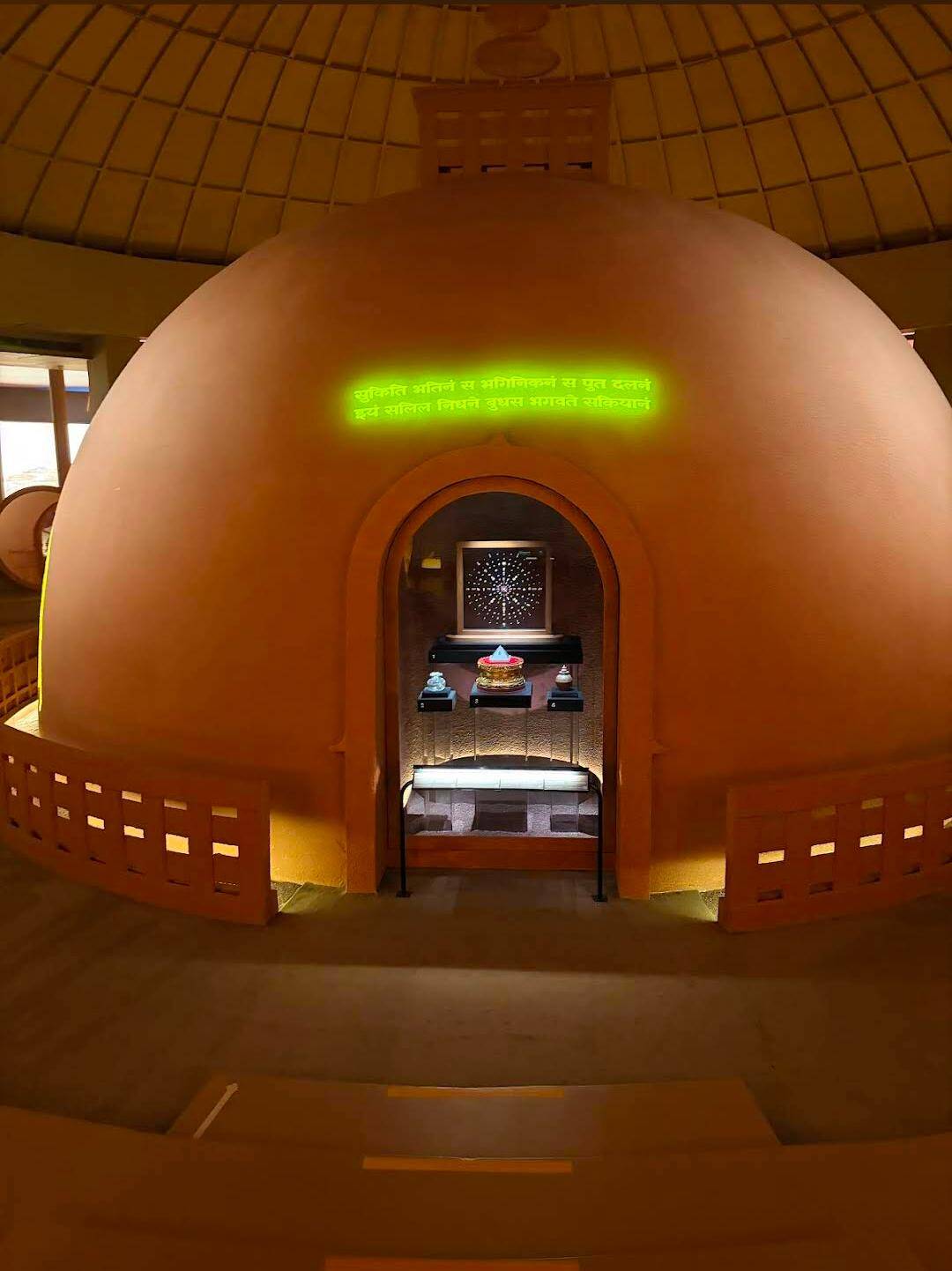

“Sukiti-bhatinam sa-bhaginikanam sa-puta-dalanam iyam salila-nidhare Bhaddhasa bhagavate sakiyanam.” This translates to:
“This enshrinement of the corporeal remnants of the Buddha, the Blessed Lord, is the pious gift of the brothers of Sukirti, jointly with their sisters, their sons, and their wives.”
A detailed breakdown of its meaning reveals its profound historical significance:
-
“Salila-nidhare” (Relic Receptacle): Identifies the vessel as a sacred treasure deposit holding the bodily relics (śarīra) of the departed.
-
“Bhaddhasa Bhagavate” (The Blessed Buddha): Explicitly confirms that the bone fragments inside the urn belong directly to the historical Gautama Buddha.
-
“Sakiyanam” (Of the Sakyas): Identifies the donors as the Buddha’s own clan. According to Buddhist texts, after the Buddha’s cremation, one of the eight equal shares of his remains was given directly to the Sakyas of Kapilavastu.
The Flame That Waited
The story of the Buddha’s Mahaparinirvana is the most sacred and touching saga of the greatest awakened soul to ever walk this earth.
When Ananda, the Buddha’s primary disciple, realised that the Buddha had attained Nirvana, he visited the Mallas’ meeting hall in Kushinagar. Weeping bitterly, he announced that the Blessed One had passed away. He advised them to view the body and begin preparations so that the community could pay their proper respects.
According to the Maha Buddhavamsa and the Mahaparinibbana Sutta, the Mallas attempted to light the funeral pyre using perfumes and fragrant woods. However, despite their best efforts, the flames would not catch. The monks understood that the fire refused to ignite out of respect for Maha Kassapa, who was still on his way to Kushinagar. The moment Maha Kassapa arrived and walked around the pyre three times to honor the Buddha’s remains, the pyre spontaneously burst into flames on its own.
The Buddha’s Mahaparinirvana triggered a new spiritual awakening across the globe. His disciples spread his message far and wide—crossing the seven seas, braving the freezing mountain passes of the Himalayas, and traversing the cold deserts of Central Asia spanning Mongolia and China. They risked their lives across the Gobi Desert and the treacherous Taklamakan Desert, famously known as the “Sea of Death.” This epic journey is a saga rarely told to us, the people of India, who are the true inheritors of the Buddha’s legacy.
Eventually, the whole of Central Asia, Bharat, Afghanistan, Gilgit, Baltistan, Srilanka, China, Eastern Turkey, Eastern Asian countries—including Korea, Siam (Thailand), Myanmar, and Japan—became immersed in the teachings of the Buddha and adopted his path.
A Shared Trance and a National Awakening
When Minister Shri Gajendra Singh Shekhawat narrated this story to me, he went into a virtual state of trance, travelling beyond the realms of time and space. I can swear before God that in those moments, I felt the spiritual touch of the Buddha, entering the realm of the Awakened One myself.
That very saga—the story of the Buddha’s Mahaparinirvana and the rediscovery of the Piprahwa relics—is now beautifully exhibited at Delhi’s famous Rai Pithora cultural complex, thanks to the vision and sensitivity of Prime Minister Narendra Modi.
It is not just a mesmerising saga of the Buddha’s final journey, captivatingly narrated to visitors by the Culture Ministry’s expert guides, Divya, Priya, and Ananya. It is also a sobering reminder of the greed and barbaric insensitivity of the British colonialists, who pirated the jewels of the Buddha and eventually forced Indians to buy back what rightfully belonged to them.
The Story of Colonial Piracy and Return
The history of this colonial theft is striking. In 1898, a British colonial estate manager named William Claxton Peppé excavated a Buddhist stupa in Piprahwa, Uttar Pradesh. Inside, he discovered a soapstone casket alongside precious jewels and gold items. The ancient Brahmi inscription on the casket clearly identified them as the sacred relics of the historical Buddha, entrusted to his own Śākyan clan.
While the bone relics and major gold artefacts were initially handed over to the Indian government (where they remained boxed away for more than a century in the Kolkata Museum), the family of William Peppé illegally retained approximately 1,800 “gem relics” as part of their private collection. They went so far as to arrogant-mindedly name the Buddha’s ancient stupa the “Peppé Stupa.”
After decades of keeping these sacred objects as personal mementos of “colonial custodianship,” the descendants of the Peppé family recently attempted to auction them through Sotheby’s in Hong Kong. This sparked global outrage, with scholars and the Indian government fiercely condemning the sale of sacred religious artefacts as a continuation of colonial loot.
In response to intense diplomatic pressure and swift legal threats from Minister Gajendra Singh Shekhawat’s office in Delhi, Sotheby’s cancelled the auction. To ensure these irreplaceable treasures were not lost to private foreign buyers, the Godrej Industries Group stepped forward, purchased the entire collection, and facilitated its return to India. The Indian people will forever be grateful to the Executive Vice Chairperson of Godrej Industries Group, Pirojsha Godrej, who privately acquired the collection at an astoundingly high, undisclosed price to save it for the nation.
Entire operation Buddha Jewel Relics was kept a secret and led by an IAS officer with meticulous planning and razor sharp execution. He is Vivek Aggarwal, with his back ground of Finance Ministry he could do what seemed impossible and even MEA hesitated to guarantee return of the jewels.
A Journey of the Soul
The relics have finally been brought home after 127 long years. They are now displayed in a fabulous exhibition at Rai Pithora, which was proudly inaugurated by Prime Minister Narendra Modi.
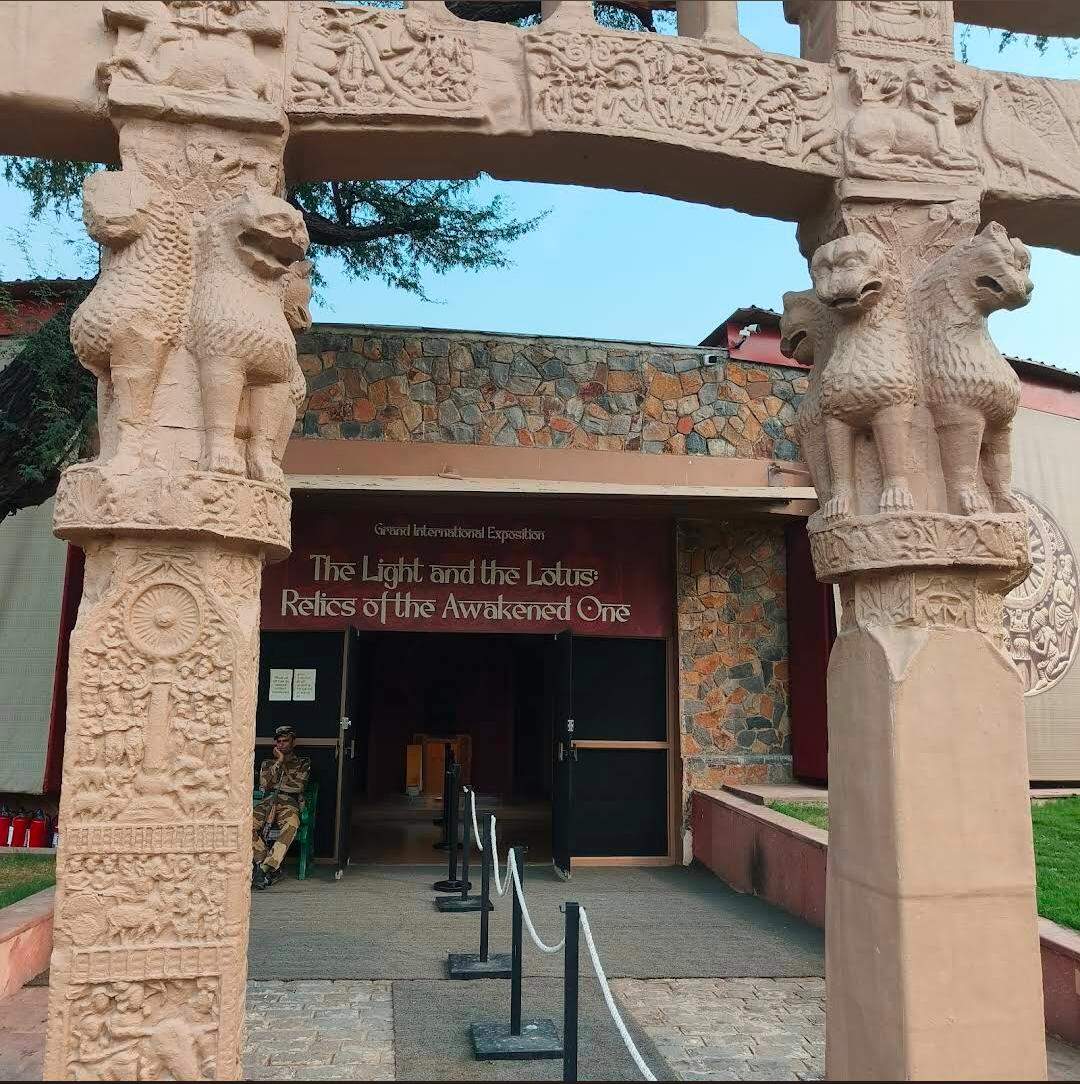

This is not merely an exhibition. It is an emotional and spiritual journey—one that compels every visitor to search their own soul and discover the Buddha sitting quietly within. Do not miss it. And do not forget to send a thank you note to PM Shri Narendra Modi for being the first leader who has been working relentlessly to bring back India’s stolen artefacts back home.
Disclaimer
Views expressed above are the author’s own.